

Spot burnout early, set boundaries, manage workloads, and rebuild a sustainable coding career with practical strategies.
Burnout affects over 73% of developers at some point in their careers. It’s not just feeling tired - it’s a mix of exhaustion, detachment, and reduced effectiveness caused by chronic workplace stress. Software development’s intense cognitive demands, constant interruptions, and "always-on" culture make it a breeding ground for burnout.
Key takeaways:
- What to watch for: Persistent fatigue, cynicism, and declining productivity often signal burnout.
- Why it happens: Heavy workloads, blurred work-life boundaries, and pressure to keep up with AI tools for developers are common causes.
- How to manage it: Set boundaries, use time management strategies like time blocking, and track achievements to stay motivated.
- When to seek help: If symptoms persist, consider therapy or workplace support programs.
This guide dives into spotting burnout, managing workloads, and building a healthy work-life balance to ensure a long-lasting coding career.
::: @figure 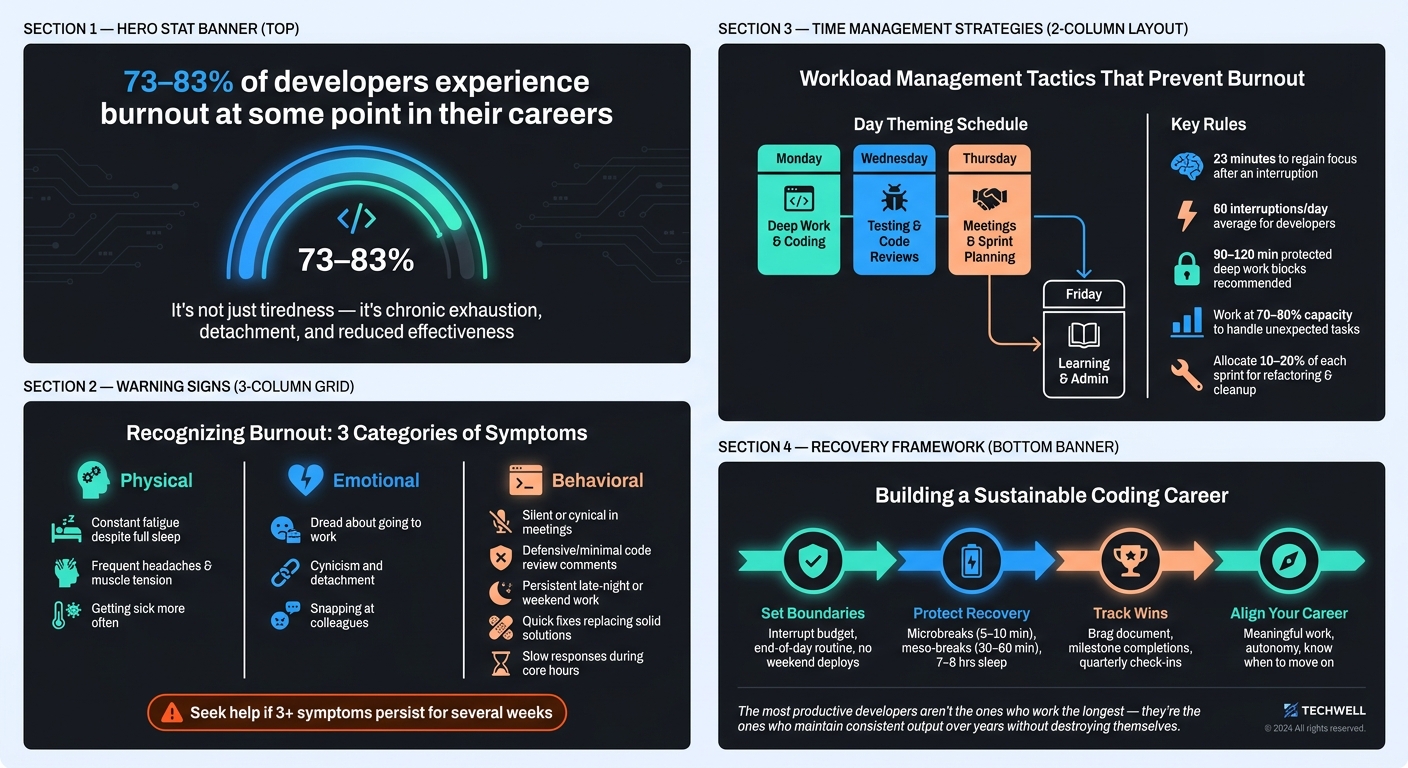 {Developer Burnout: Key Stats, Signs & Recovery Strategies}
An engineer's guide to preventing burnout | Jacquelyn MacCoon | TEDxUofT

::: @iframe https://www.youtube.com/embed/cRtKZMw3rto
sbb-itb-bfaad5b
Recognizing the Signs of Burnout
Burnout doesn’t hit all at once - it builds up over time. Spotting early changes in your body, emotions, and work habits can help you take action before it fully sets in. Let’s break down the physical, emotional, and behavioral signs that often point to burnout.
Emotional and Physical Symptoms to Watch For
Burnout often manifests physically and emotionally. On the physical side, you might feel constantly tired, even after a full night’s sleep. Frequent headaches, muscle tension, or getting sick more often than usual can also be clues. Emotionally, burnout can feel like a growing sense of dread about work, a loss of connection to your tasks, or snapping at colleagues over small frustrations. You might also notice creeping cynicism or a sense of detachment.
Cognitive symptoms are just as telling. Difficulty concentrating, forgetting things more often, or blowing minor setbacks out of proportion are all common. These warning signs can be tracked using tools like the Maslach Burnout Inventory (MBI) . If these symptoms persist and cluster together, it’s a strong signal to step back and reassess .
Work Behaviors That Signal Burnout
Changes in work habits are often the clearest indicators of burnout. A team member who used to actively participate in discussions might suddenly go quiet, while their code reviews become short and defensive. Tasks that once took a day may start dragging on for a week. When someone enters the "disengaged phase", they may simply move tasks along without any real involvement or care .
Another major warning sign is consistently working late nights or weekends just to keep up with normal workloads . Some teams use tools like Jellyfish to track patterns like after-hours activity or frequent context-switching, which can indicate trouble. Pay attention to your own habits - if thoughtful work is being replaced by quick fixes, it’s time to take a closer look.
| Behavioral Sign | What It Signals |
|---|---|
| Silent or cynical in meetings | Emotional withdrawal from the team |
| Defensive or minimal code review comments | Irritability and reduced patience |
| Persistent late-night/weekend work | Overload or weak boundaries |
| Quick fixes replacing solid solutions | Cognitive fatigue or loss of focus |
| Slow responses during core hours | Difficulty concentrating or disengagement |
Spotting these behaviors early gives you the chance to seek help before burnout worsens.
When to Seek Professional Help
If you notice three or more burnout symptoms sticking around for weeks, it’s time to reach out for help . Physical reactions like headaches or stomach cramps at the mere thought of work are especially concerning and shouldn’t be ignored .
In the U.S., many employers offer Employee Assistance Programs (EAPs) that provide free, confidential counseling sessions - this can be a good first step. You can also look for an in-network therapist who specializes in work stress. Therapies like Cognitive Behavioral Therapy (CBT) or Acceptance and Commitment Therapy (ACT) are particularly effective for tackling burnout . If you’re in crisis or need immediate help, you can call or text the 988 Suicide & Crisis Lifeline, which is available 24/7 nationwide.
Burnout can sometimes spiral into depression, and it’s not always easy to tell the difference on your own. Professional guidance can help you get back on track and maintain a rewarding career in coding. Recognizing the signs early is key to making that happen.
Managing Workload and Time
Once you’ve spotted the signs of burnout, the next step is figuring out how to tackle its root causes. Recognizing burnout is only half the battle - learning how to structure your work and stay focused is where real change happens.
Setting Priorities and Boundaries at Work
A heavy workload often leads to exhaustion and inefficiency, but prioritizing tasks can make a big difference. Focus on work that creates clear value, whether for users, the product, or the business. This includes high-impact tasks and often-overlooked efforts like documentation or refactoring.
For example, allocating 10–20% of each sprint for refactoring and cleanup can prevent technical debt from piling up. Ignoring this kind of work may not seem like a big deal at first, but over time, it can make daily coding feel overwhelming.
Boundaries are just as crucial. If constant interruptions are throwing you off track, try setting an interrupt budget - maybe limit yourself to handling 2–3 unplanned requests per day. This doesn’t mean being unavailable; it’s about protecting the time you need for focused, meaningful work. And if a deadline feels impossible, don’t wait until you’re drowning - speak up early and renegotiate.
Time Management Methods That Work
Interruptions are a productivity killer. With an average of 60 interruptions a day, it can take up to 23 minutes to regain focus after each one. That’s why structured time management is key.
Time blocking is one method that works well. Instead of just jotting down a to-do list, schedule specific tasks directly into your calendar. For your most important work, set aside protected 90- to 120-minute blocks to align with your brain’s natural focus cycles .
Another approach is day theming, where you dedicate entire days to specific types of work:
| Day | Focus Theme |
|---|---|
| Monday / Tuesday | Deep Work & Coding |
| Wednesday | Testing & Code Reviews |
| Thursday | Meetings & Sprint Planning |
| Friday | Learning & Admin |
Batching reactive tasks, like emails or code reviews, into fixed time slots can also reduce stress and help you focus .
"A schedule isn't about rigid control. It's about creating freedom - the freedom to focus on what matters most without the constant drag of distractions and low-value work." - Locu.app
Once your time is structured, tracking your progress becomes the next step to staying motivated.
Tracking Progress and Marking Wins
Feeling busy without seeing results can lead to burnout. Shifting your mindset from measuring hours to tracking accomplishments can help. Instead of asking, “How long did I work today?” ask, “What did I create or complete today?”
One tool that helps is a "brag document" - a personal log of your achievements, even the less visible ones like mentoring a colleague, fixing a tricky bug, or improving documentation. This not only helps you see your impact but also makes performance reviews with your manager a lot easier .
Breaking work into smaller milestones is another way to stay motivated. Completing a specific task - whether it’s closing a ticket, passing a test, or finishing a feature - gives your brain a much-needed sense of accomplishment . Tools like Super Productivity can support this by combining time tracking, Pomodoro timers, and task management . For staying informed without feeling overwhelmed, platforms like daily.dev curate relevant news and learning resources for developers in one place.
"The most productive developers aren't the ones who work the longest – they're the ones who maintain consistent output over years without destroying themselves." - Johannes, Creator of Super Productivity
Building a Life Outside of Work
Managing your time during work hours is important, but what you do after logging off is just as crucial. A thriving coding career isn’t just built at your desk - it’s shaped by how you spend your time away from it.
Separating Who You Are from What You Do
For many developers, their job becomes their entire identity. This can lead to "identity threat" - where a single negative experience, like a bad code review, feels like a personal failure . That’s an exhausting way to live. To have a sustainable career, it’s essential to separate your self-worth from your work.
One practical way to create this separation is by implementing a clear end-of-day routine. Dedicate the last 15 minutes of your workday to jotting down where you left off and outlining your next steps . This habit helps you offload lingering thoughts about unfinished tasks, so you’re not mentally debugging at midnight. By drawing a firm line between work and personal time, you set the stage for genuine relaxation.
"Loving the work doesn't automatically make the work sustainable." - Dev_Tips, DEV Community
Rest and Movement as Daily Habits
Coding demands intense focus, which can quietly drain your mental energy. Unlike muscle fatigue, mental exhaustion often creeps up on you . That’s why recovery isn’t optional - it’s an essential part of staying effective.
Adopt the 20-20-20 rule: every 20 minutes, look at something 20 feet away for 20 seconds. Combine this with 5–10 minute microbreaks for stretching or deep breathing . Additionally, aim for at least one meso-break each day - 30–60 minutes of real disengagement, like taking a walk or having a proper meal . And don’t skimp on sleep; getting 7–8 hours nightly helps prevent cognitive burnout .
| Break Type | Duration | Best Activities |
|---|---|---|
| Microbreak | 5–10 minutes | Stretching, 20-20-20 rule, deep breathing |
| Meso-break | 30–60 minutes | Exercise, nature exposure, proper meals |
Hobbies and Community Connections
Recovery isn’t just about breaks - it’s also about finding joy in activities outside work. Hobbies like cooking, hiking, reading, or playing music activate different parts of your brain. They can even counteract what some developers call "code blindness," where everything starts to blur together . These activities refresh your creativity and curiosity.
Social connections play a similar role. Building relationships outside your tech bubble can be a powerful antidote to burnout . Peer groups, like daily.dev Squads, offer a supportive space to share experiences with others who understand your challenges - without the added stress of your immediate work environment . Recognizing that burnout often stems from systemic issues, not personal shortcomings, is a vital step toward tackling it .
"Taking care of your mental health isn't just about being more productive – it's about living a more balanced and fulfilling life." - Javeed Ishaq, Software Developer
Building a Long-Term Coding Career
Short-term fixes can help, but building a lasting and fulfilling career in coding requires strategies that align with your values and long-term goals. By combining effective daily habits with thoughtful career planning, you can create a path that sustains both your productivity and well-being.
Setting Career Goals and Limits
Burnout often stems from misplaced effort rather than simply working too much. When your work no longer feels meaningful or aligned with your values, it's easy to lose motivation. That’s why career goals should go beyond titles or salaries - they should focus on doing work that matters to you and allows for personal growth.
Ask yourself: Does my current role provide meaningful work? Do I have enough influence over technical decisions? These questions can help you assess whether your work aligns with your priorities. Additionally, setting clear boundaries is vital. For example, limit on-call hours or use tools like GitHub Actions to prevent weekend deployments, ensuring you have protected downtime .
Running Regular Burnout Check-Ins
In addition to daily self-care, regular career check-ins can help you evaluate your long-term alignment with your goals. Try tracking your daily energy, autonomy, and sense of purpose on a scale of 1–10. Note your biggest frustrations as well. Every three months, review this log to determine if your work still supports your aspirations. Pair this with a "Wins" file where you document accomplishments, like overcoming challenges or delivering key features. This tangible record can counteract the feelings of inefficacy that often accompany burnout .
"Burnout isn't exhaustion from working hard. It's exhaustion from working hard and getting nothing back that sustains you." - Akshay Kurve
Another helpful strategy is maintaining a workload of about 70–80% of your maximum capacity. This buffer allows you to handle unexpected tasks without falling into the trap of constant overwork .
Knowing When It Is Time to Move On
Sometimes, burnout can't be resolved within your current role. If your job is negatively impacting your well-being, it may be time to reassess your career path. Start by identifying the root cause: Is it a toxic work environment with unrealistic deadlines? A lack of opportunities for growth? Or the constant pressure to keep up with new technologies ?
If the issue is environmental, switching roles might be the solution. If you're feeling stuck in your skills, consider dedicating 30 days to learning a new technology to reignite your motivation . The 90-day rule can also be helpful - commit to making targeted changes for 90 days before deciding if the situation is beyond repair . However, when there's a persistent mismatch in workload, rewards, or values, no amount of personal effort will fix the problem .
"You can build personal resilience, but you can't yoga your way out of a fundamentally unsustainable job." - Johannes, Creator of Super Productivity
If leaving is the best option, make the transition count. Identify the skills you'll need for your next role, close any gaps, and seek teams that respect boundaries and promote developer autonomy. As one developer wisely put it:
"The fix isn't quitting software - it's quitting that job." - Alan West, Web Developer
Conclusion: Steps Toward a Healthier Coding Career
Burnout doesn’t happen overnight - it’s a slow build-up, and recovering from it takes patience. The numbers speak for themselves: between 73% and 83% of developers have faced burnout at some point in their careers . This isn’t about personal shortcomings - it’s a systemic issue that calls for broader solutions. The first step? Acknowledging the problem and committing to change.
Even small, steady adjustments can make a big difference. Setting aside a few hours daily for uninterrupted focus, following remote productivity best practices, planning workloads at 70–80% capacity instead of maxing out, and keeping track of your achievements aren’t just nice-to-have habits - they’re practical tools to help you stay resilient and avoid burnout over time.
Think of your career as a marathon, not a sprint. Establishing clear boundaries, scheduling regular self-check-ins, and cultivating an identity beyond your job title can provide a sense of balance and purpose. These actions align with earlier tips like setting limits and celebrating your wins. Start small: block off a 3-hour focus window, jot down three accomplishments from this week, and turn on "do not disturb" after 6:00 PM. Each step brings you closer to a healthier, more sustainable coding journey.
FAQs
How can I tell burnout from normal stress?
Burnout stands apart from regular stress due to its intensity and long-lasting nature. Key indicators include feeling perpetually drained, developing a cynical attitude toward work, experiencing a noticeable drop in performance, and dealing with physical issues that don't improve with rest. In contrast, normal stress tends to be temporary and more manageable. It's important to monitor how long these feelings persist and whether they interfere with your overall well-being or your ability to bounce back after taking breaks.
What should I say to my manager when I’m overloaded?
When you're feeling swamped, it's important to talk openly and professionally with your manager. Explain how the workload is affecting your performance - for example, you might say: "I’ve been feeling overwhelmed, and it’s impacting my focus and ability to meet deadlines."
Then, propose practical solutions to address the issue. You could suggest prioritizing tasks, extending deadlines, or refining workflows: "Could we review priorities or adjust timelines to ensure the quality of work?"
Approaching the conversation as a collaborative effort encourages a productive and supportive discussion.
How do I recover from burnout without quitting my job?
Recovering from burnout while keeping your current job involves creating healthier work habits and setting clear boundaries. Start by having an open conversation with your manager to adjust your workload and establish firm limits on your work hours. Protecting your mental and physical health is key - try incorporating regular exercise, engaging in hobbies you enjoy, and ensuring you get enough sleep. Taking consistent breaks and seeking support from coworkers, friends, or even professionals can also make a big difference. Remember, recovery is a gradual process, so focus on making small, steady changes while addressing all aspects of your well-being.


