A deep technical dive into why the NES produces a wobbly composite video image. The NES PPU generates color signals directly in the composite domain using a 21.47727 MHz oscillator divided to produce 12 color phases, resulting in 227.33 colorburst cycles per scanline rather than the ideal 227.5. This creates a three-line repeating artifact pattern. Ricoh's engineers addressed this with a 'missing dot' trick — alternating scanlines between 341 and 340 dots — reducing the visible pattern to a two-frame alternation. The post also covers how games like Battletoads that disable rendering to access VRAM bypass this correction, revealing the underlying three-frame pattern.
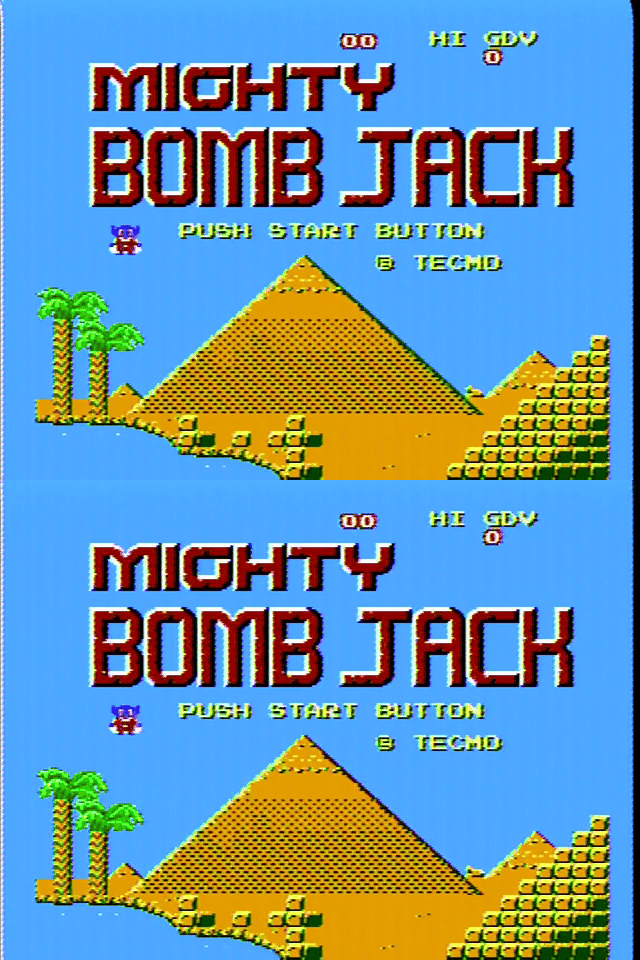
Table of contents
Not so mighty now, are youExplanation Attempt 1: InterferenceExplanation Attempt 2: The colorburstExplanation Attempt 3: The NES is differentRare is the exception44 Impressions