Build a credible developer presence in 2026 with a focused 3-4 platform stack for code, writing, conversation, and news.
If I had to keep it simple, I’d use 3 to 4 platforms max: GitHub for code, dev.to or Hashnode for writing, X or Bluesky for talk, and daily.dev for news. That setup covers the main parts of a developer profile without spreading time too thin.
Here’s the short answer:
- GitHub shows what I build
- dev.to and Hashnode show how I write and teach
- X, Bluesky, and Mastodon show who I talk to and what I follow
- daily.dev helps me track developer news in one feed
- There is no single “LinkedIn for developers” that does all of this well
A lot of developers split their time across 4 jobs: code, writing, conversation, and news. That’s why one profile alone usually falls short. In 2026, recruiters and peers often check GitHub, blog posts, and public posts together, not just a resume.
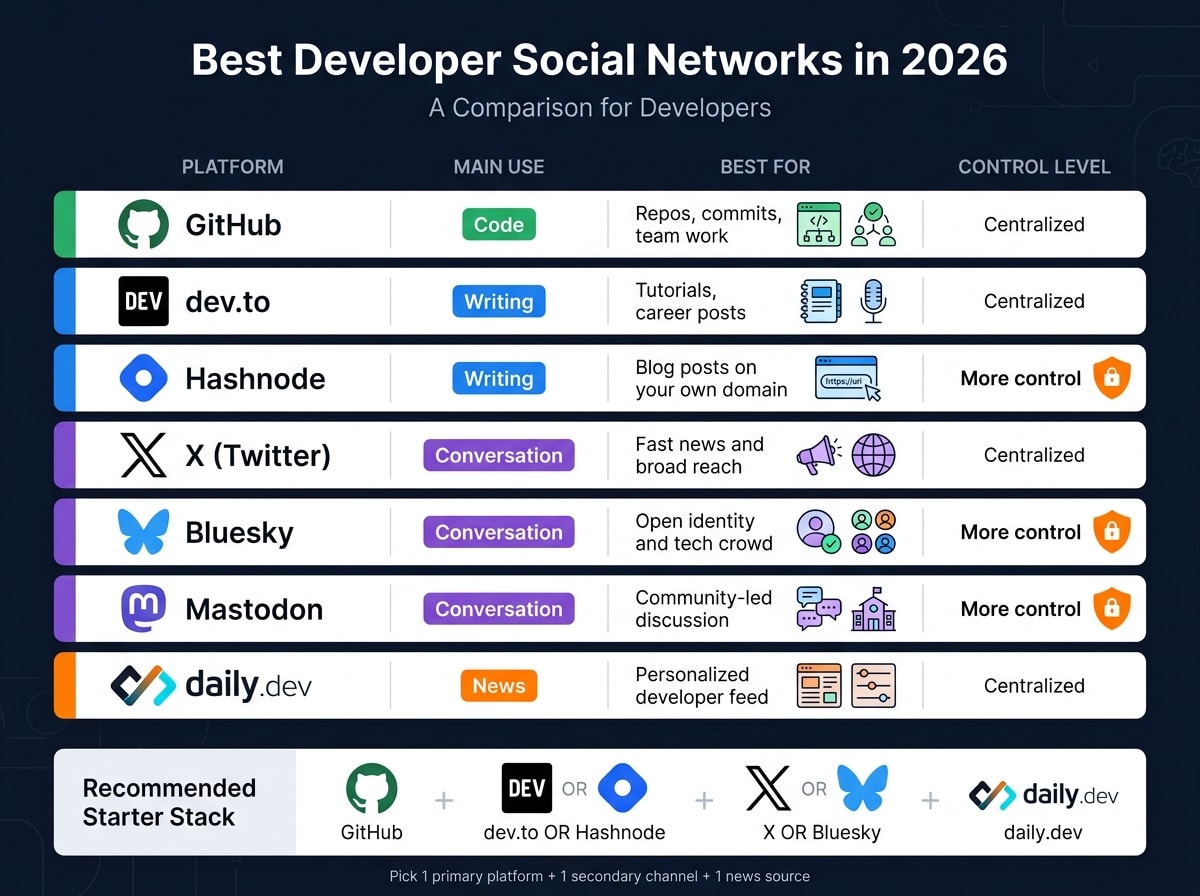
Quick Comparison
| Platform | Main use | Best for | Control level |
|---|---|---|---|
| GitHub | Code | Repos, commits, team work | Centralized |
| dev.to | Writing | Tutorials, career posts | Centralized |
| Hashnode | Writing | Blog posts on your own domain | More control |
| X | Conversation | Fast news and broad reach | Centralized |
| Bluesky | Conversation | Open identity and tech crowd | More control |
| Mastodon | Conversation | Community-led discussion | More control |
| daily.dev | News | Personalized developer feed | Centralized |
My takeaway: pick one main platform and one support platform. Then link them together. That gives you a clean setup that is easy to keep up with and easy for other people to understand.
The main developer social networks to know
These platforms line up with four main types of presence: code, writing, conversation, and news.
GitHub, dev.to, and Hashnode
GitHub is where your code does the talking. It’s still the default place to show what you’ve built, with repositories, contributions, and activity history serving as proof of work. GitHub Discussions also gives you a place to ask questions and keep up with repo-level conversations .
dev.to is built for writing. It leans toward tutorials, career posts, and beginner-friendly content, and it tends to reward fast publishing with quick community feedback. Your profile shows both what you publish and how readers respond .
Hashnode has a similar writing-first setup, but with one big difference: you can connect a custom domain to your blog. That means the SEO equity you build stays with you. For long-term personal branding, that ownership piece matters .
These platforms work best when your presence is built around code or writing. If you care more about talking with people than publishing posts, the next group makes more sense.
X, Bluesky, and Mastodon
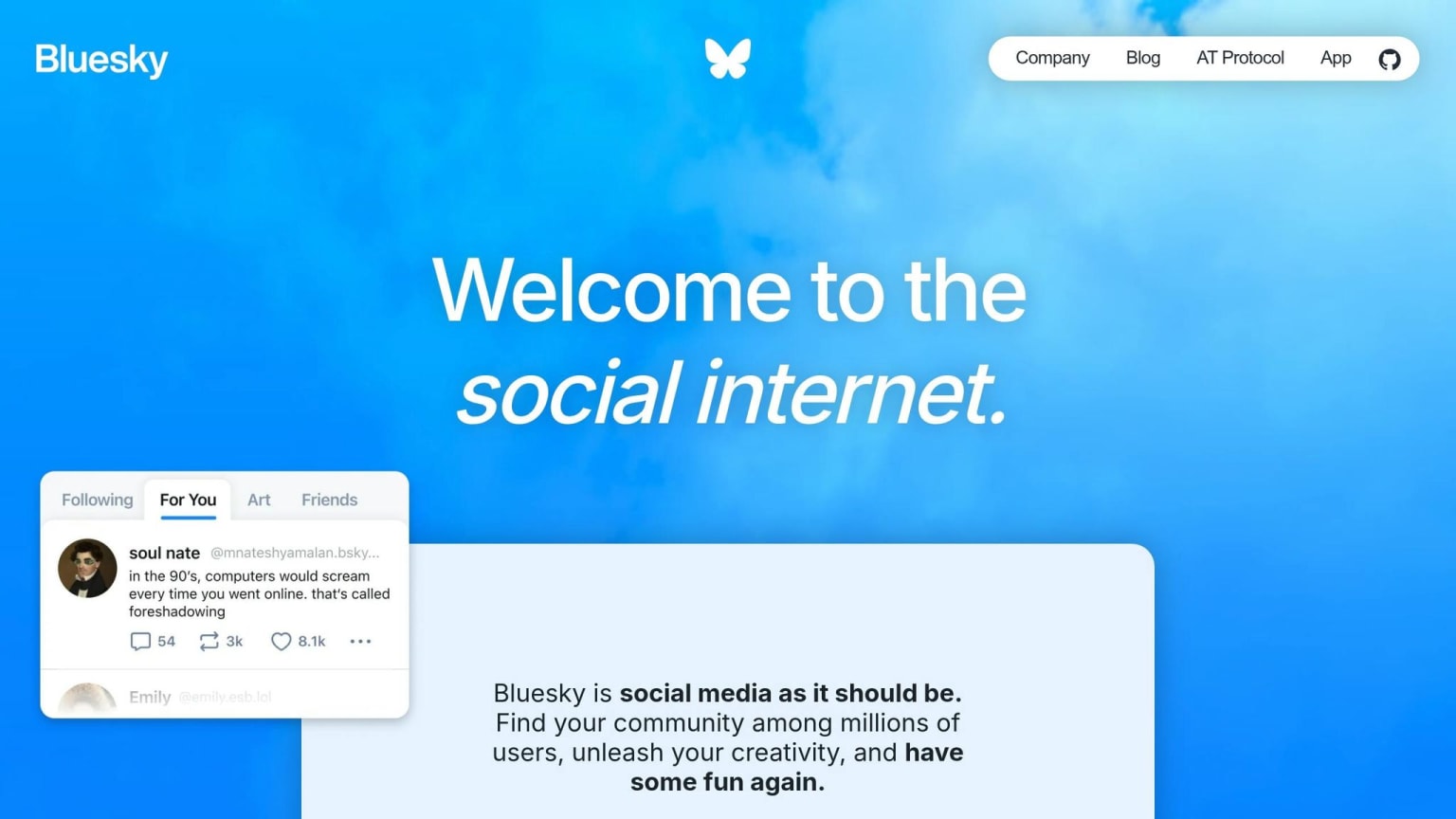
For real-time conversation, the picture shifts a bit. All three of these platforms are conversation-first, but they draw different crowds.
X (formerly Twitter) gives you broad reach and fast access to real-time industry news. Bluesky, built on the AT Protocol, tends to appeal to developers who care about open architecture and an identity they can carry across communities. Mastodon pushes that even further with full federation, so you can join a tech-focused instance and keep your presence in a community-governed space.
Put simply: X gives you reach. Bluesky and Mastodon give you more control over identity and community .
If your main goal is news and discovery, though, there’s a platform that fits that job more directly.
daily.dev
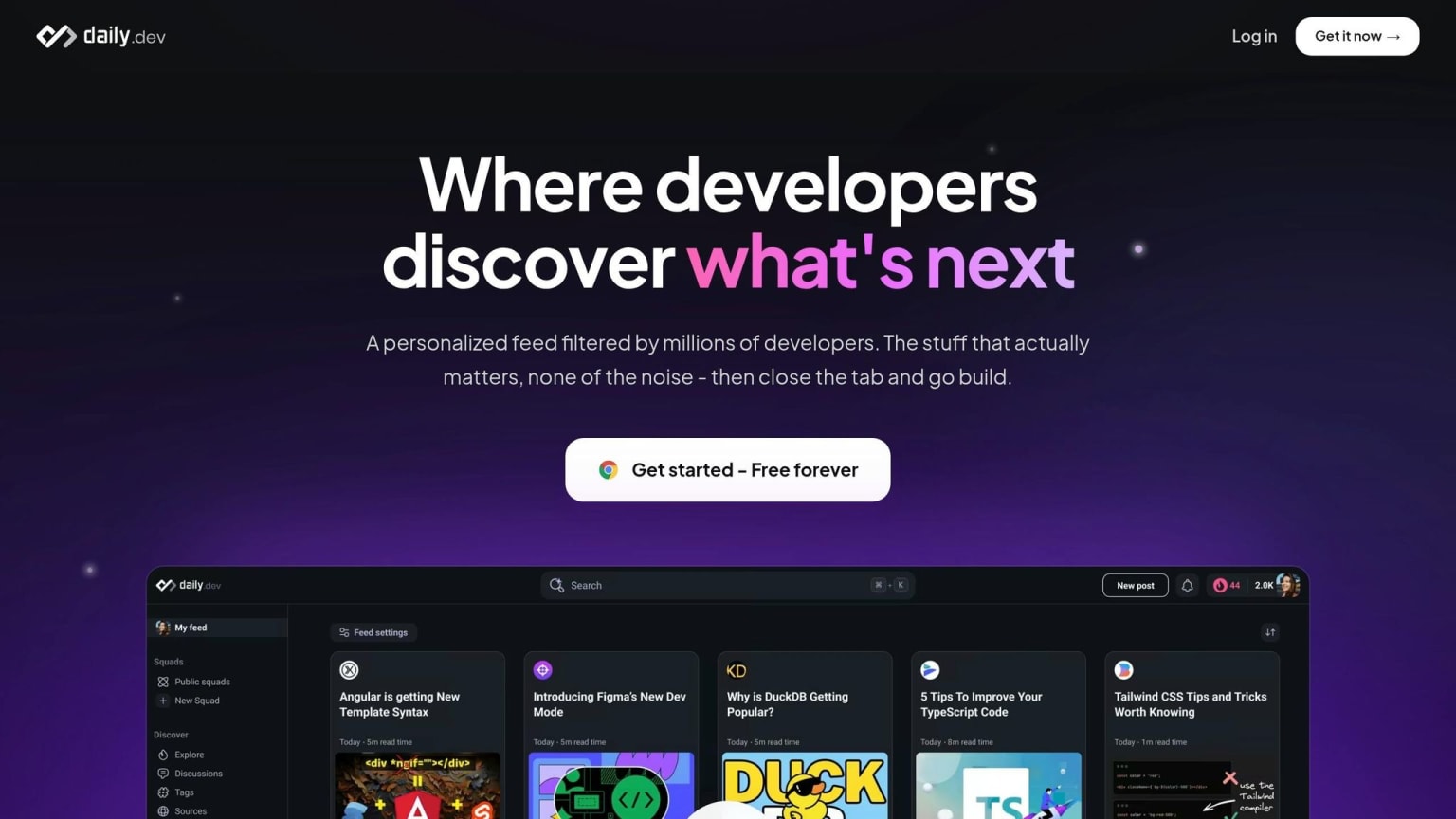
For developers who want news and discovery first, the focus shifts again. daily.dev is a news-first network with a built-in social layer. A personalized feed, DevCards, Squads, and Search help developers follow topics, share what they know, and stay current in one place .
That still leaves one gap: a single place for professional identity across all of it.
Is there a LinkedIn for developers?
There isn’t one platform that does all of this for developers.
A developer’s reputation is split across code, writing, conversation, and discovery. So one profile can’t show every part of a developer’s presence.
Why one platform does not cover everything
When people ask for a “LinkedIn for developers,” they usually want one place that shows work history, proves technical skill, helps recruiters find them, and makes networking easy.
The issue is simple: developer proof of work shows up in too many different formats for one profile to handle well.
A GitHub profile shows what you’ve built. A Hashnode blog shows how you think. A thread on X or Bluesky shows who you talk to and what topics you follow. Those signals don’t map neatly from one platform to another. Recruiters in 2026 know this - they cross-reference GitHub profiles, personal sites, and published technical articles instead of leaning on a resume alone . That’s the gap between a profile and a presence.
LinkedIn still matters for recruiting and broad professional networking. But it’s not where technical credibility gets built.
So the practical answer is a small mix of platforms, with each one doing a specific job well.
The stack most developers use
Most developers use a compact stack that covers the main needs:
- GitHub for code presence
- dev.to or Hashnode for writing
- X or Bluesky for public conversation
- daily.dev for staying current
Each platform handles one part of the identity puzzle.
daily.dev covers discovery through a personalized feed, DevCards, and topic-based communities.
Yes, that split is real. But a focused stack of three or four platforms - each with a clear role - is still manageable. The goal isn’t to be everywhere. It’s to be credible where your work actually lives.
Once you see that a stack makes sense, the next move is picking the mix that fits your goal.
How to pick the right network for the presence you want
Match your platform to your goal: code, writing, conversation, or news
No single network does everything well. So start with a simple question: what kind of presence do I want to build?
If the answer is code, GitHub gives people a verifiable record of work you’ve actually shipped. If the answer is writing, Hashnode lets you connect a custom domain, which helps you keep ownership of your search visibility, while dev.to can put your posts in front of a broader developer crowd. For real-time conversation, X or Bluesky help you build visibility through what you post and the people you engage with. And if your main goal is staying current, daily.dev gives you a personalized feed based on what you read .
Build a small multi-platform setup you can actually maintain
A good rule of thumb is one primary platform and one secondary channel. Give each one a clear job: code, writing, conversation, or news. Then connect them. A GitHub README that links to your blog, or a daily.dev DevCard shared on your social profiles, makes it simple for someone who finds one part of your work to find the rest.
You don’t need to be everywhere. Consistency beats volume.
The comparison below makes the tradeoffs easier to see.
Comparison summary and conclusion
Comparison table by platform
If you want the short version, the table below shows what each platform is best at.
| Platform | Best for | What it shows | Ownership/control |
|---|---|---|---|
| GitHub | Code & collaboration | Repos, contributions | Centralized |
| dev.to | Tutorials & writing | Articles, badges | Centralized |
| Hashnode | Personal branding | Blog with custom domain | User-owned domain |
| X | Real-time conversation | Bio, links | Centralized |
| Bluesky | Real-time conversation | Bio, links | Federated |
| Mastodon | Real-time conversation | Bio, links | Federated |
| daily.dev | Developer news | Personalized feed, Squads | Centralized |
The main idea is simple: pick platforms based on the job they do, not because everyone's talking about them.
Key takeaways
Each platform has its own role. Some are best for code. Others are better for writing, conversation, or staying on top of developer news.
For most developers, a small stack is enough:
- GitHub for code and collaboration
- One writing or conversation platform
- daily.dev for news
That usually gives you a clean setup without spreading yourself too thin. Pick one primary platform, one secondary channel, and one place to keep up with news.
FAQs
How do I choose my main platform?
Choose based on your main goals. Don’t box yourself into picking just one platform.
A smart setup is to use your personal blog or website as the source of truth, then cross-post to other platforms with canonical links. That way, you can show up in more places without splitting your content too much.
Here’s the simple breakdown:
- dev.to works well if you want fast feedback and active engagement.
- Hashnode is a strong pick for long-term branding and SEO because it supports a custom domain.
- LinkedIn is still the go-to platform for professional networking and visibility.
In practice, many writers use a mix: publish first on their own site, then share the same post across other channels to reach different audiences.
Should I use dev.to or Hashnode?
It depends on your personal branding goals, and you don’t have to pick just one.
Choose dev.to if you want quick engagement, fast feedback, and visibility through a shared social feed. Choose Hashnode if your focus is long-term brand building and more control, including publishing on a custom domain while still getting discovered through the community.
How often should I post on each platform?
Consistency matters on every platform, but the right posting pace depends on what you want most: more reach, a stronger community, or both.
For blogging platforms like dev.to, Hashnode, and Medium, syndicate each post when it goes live on your main site, and use a canonical link. For social and community platforms, focus less on hitting a rigid posting quota and more on showing up on a regular basis. Stay active, join conversations, and keep your presence steady without stretching yourself too thin.