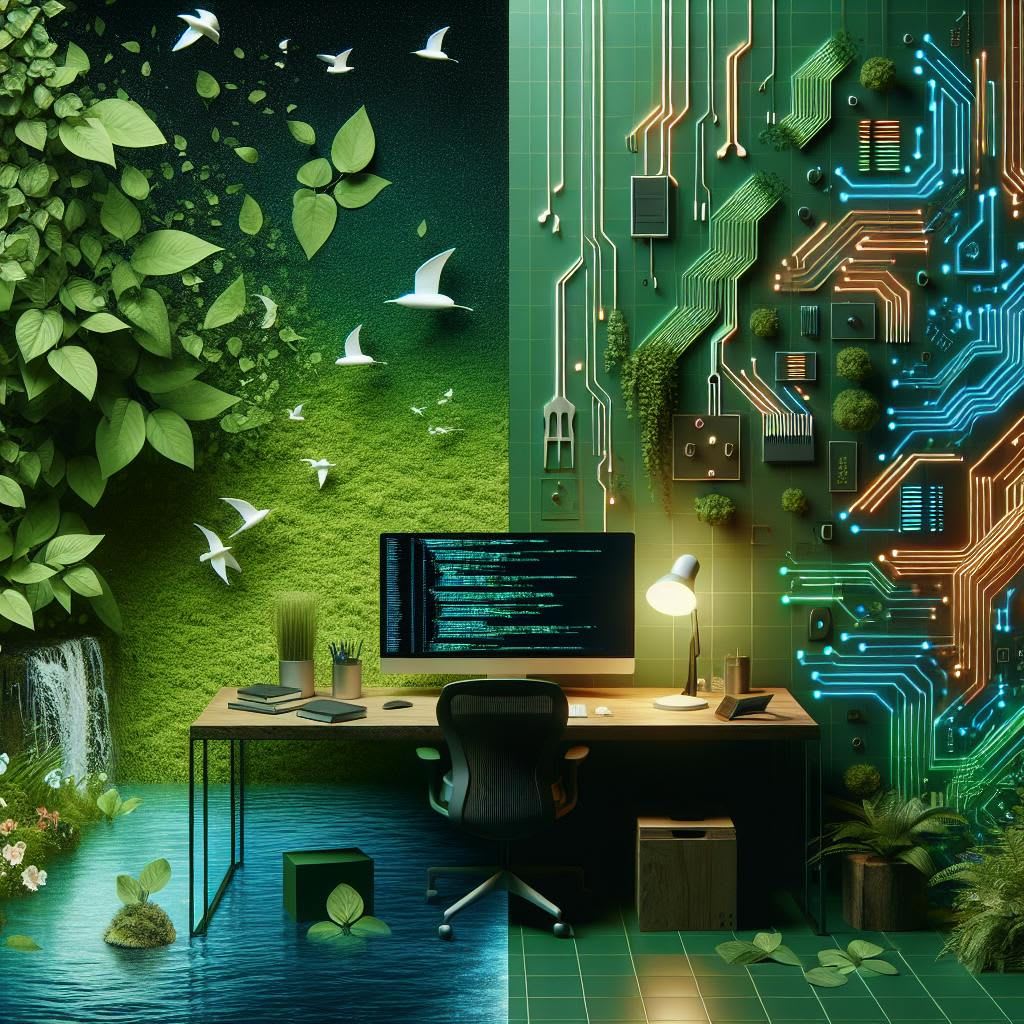
Explore the key differences between green and traditional software development, including energy use, resource optimization, carbon impact, and more. Learn how companies like Google, Microsoft, and Salesforce are implementing green software practices.
Green software development aims to reduce energy use, emissions, and e-waste, while traditional development focuses on functionality and performance. Here's a quick comparison:
| Aspect | Green Software | Traditional Software |
|---|---|---|
| Energy Use | Minimizes power consumption | Prioritizes speed and features |
| Resource Use | Optimizes resource utilization | May be wasteful |
| Carbon Impact | Aims to reduce emissions | Often ignores environmental effects |
| Lifecycle Planning | Considers long-term eco-impact | Focuses on short-term goals |
| Hardware Choices | Selects energy-efficient hardware | Chooses based on performance |
| Cloud Services | Uses clean energy providers | May use any cloud service |
| Code Efficiency | Optimizes for energy savings | Optimizes for speed |
| Development Tools | Uses energy-tracking tools | Uses standard tools |
| Testing Methods | Tests for energy efficiency | Tests for functionality |
| Long-term Upkeep | Plans eco-friendly updates | Updates for new features |
Key facts:
- Data centers use 1% of global electricity, potentially rising to 8% by 2030
- Tech industry could account for 14% of global emissions by 2040
- One AI model can emit as much carbon as 5 cars in their lifetimes
Companies like Google, Microsoft, and Salesforce are already implementing green software practices, showing the growing importance of this approach in the tech industry.
Related video from YouTube
Overview of Differences
This section looks at how green and regular software development differ in key areas.
10 Key Differences at a Glance
| Aspect | Green Software Development | Traditional Software Development |
|---|---|---|
| Energy Use | Aims to use less energy and create fewer emissions through better coding | Focuses on making software work well, not on saving energy |
| Resource Use | Tries to use fewer resources when making and testing software | Often uses more resources than needed |
| Carbon Impact | Works to lower the carbon footprint of software and systems | Usually doesn't think about carbon emissions |
| Lifecycle Planning | Thinks about the environment at every stage, from design to use | Mainly cares about short-term goals and how well the software works |
| Hardware Choices | Picks hardware that uses less energy | Chooses hardware based on how well it performs |
| Cloud Services | Uses cloud services powered by clean energy | May use any cloud service without checking its energy source |
| Code Efficiency | Writes code to use less energy | Writes code to work well, even if it uses more energy |
| Development Tools | Uses tools that help save resources | Uses tools that help work faster |
| Testing Methods | Tests in ways that use less energy and fewer resources | Tests in ways that might waste resources |
| Long-term Upkeep | Plans updates to keep the software eco-friendly | Plans updates to keep the software working well |
Real-World Examples
- Google's Carbon-Intelligent Computing Platform
In 2020, Google started a system that moves computing tasks to times when more clean energy is available. This cut emissions by 40% in some data centers.
- Salesforce's Net Zero Cloud
Salesforce launched this product in 2019 to help companies track and lower their carbon emissions. It shows how green software can create new business chances.
- Microsoft's Sustainability Calculator
Microsoft released a tool in 2020 for Azure cloud customers to measure their carbon emissions. This shows big tech companies are starting to focus on green software.
Key Facts
- Data centers use about 1% of the world's electricity.
- The tech industry could make up 14% of the world's carbon emissions by 2040, up from 1.5% in 2007.
- One AI model can create as much carbon as 5 cars do in their lifetimes.
Why It Matters
Comparing these two ways of making software is important because:
- The tech industry is using more energy and creating more emissions.
- People and governments want tech companies to be more eco-friendly.
10 Main Differences
This section compares ten key aspects of green and traditional software development.
1. Energy Use
| Green Software | Traditional Software |
|---|---|
| Writes code to use less power | Focuses on speed and features |
| Aims to lower energy bills | Often uses more energy than needed |
Real-world example: In 2020, Google's Carbon-Intelligent Computing Platform cut emissions by 40% in some data centers by moving tasks to times when clean energy was more available.
2. Resource Use
| Green Software | Traditional Software |
|---|---|
| Uses resources carefully | May waste resources |
| Optimizes algorithms | Focuses on quick results |
Fact: The IT sector can help cut nearly 10 times more CO2 than it produces, according to the Global e-Sustainability Initiative.
3. Carbon Impact
| Green Software | Traditional Software |
|---|---|
| Tries to lower carbon emissions | Doesn't usually think about emissions |
| Picks eco-friendly options | May ignore environmental effects |
Example: Training one AI model can create as much carbon as five cars do in their lifetimes.
4. Lifecycle Planning
| Green Software | Traditional Software |
|---|---|
| Plans for long-term eco-friendliness | Focuses on short-term goals |
| Considers environmental impact at every stage | Mainly cares about how well the software works |
5. Hardware Choices
| Green Software | Traditional Software |
|---|---|
| Picks hardware that uses less energy | Chooses hardware based on speed |
| Tries to use hardware longer | May need frequent upgrades |
6. Cloud Services
| Green Software | Traditional Software |
|---|---|
| Uses cloud services powered by clean energy | May use any cloud service |
| Shares resources to save energy | Might use more energy with private servers |
Example: Microsoft's Sustainability Calculator, launched in 2020, helps Azure cloud customers measure their carbon emissions.
7. Code Efficiency
| Green Software | Traditional Software |
|---|---|
| Writes code to use less energy | Writes code to work fast |
| Optimizes for power savings | May create code that wastes power |
8. Development Tools
| Green Software | Traditional Software |
|---|---|
| Uses tools that track energy use | Uses standard tools |
| Picks tools that help save resources | Focuses on tools for quick coding |
9. Testing Methods
| Green Software | Traditional Software |
|---|---|
| Tests for energy use | Tests if software works |
| Checks resource efficiency | Focuses on speed and features |
10. Long-term Upkeep
| Green Software | Traditional Software |
|---|---|
| Plans updates to stay eco-friendly | Updates to add features |
| Aims for easy, low-impact changes | May need big, resource-heavy updates |
Fact: Data centers use about 1% of the world's electricity, and this could rise to 8% by 2030.
These differences show how green software development tries to lower the environmental impact of technology while still making good products.
Wrap-up
Key Points Summary
We've looked at how green and regular software development are different. Here's a quick overview:
| Aspect | Green Software Development | Traditional Software Development |
|---|---|---|
| Energy Use | Tries to use less power | Cares more about speed |
| Resource Use | Uses resources carefully | May waste resources |
| Carbon Impact | Tries to make less CO2 | Doesn't think about CO2 |
| Lifecycle Planning | Plans for long-term effects | Focuses on short-term goals |
| Hardware Choices | Picks low-energy hardware | Chooses fast hardware |
| Cloud Services | Uses clean energy clouds | Uses any cloud service |
| Code Efficiency | Writes code to save energy | Writes code to work fast |
| Development Tools | Uses tools to track energy use | Uses standard tools |
| Testing Methods | Tests for energy use | Tests if software works |
| Long-term Upkeep | Plans updates to stay green | Updates to add features |
Looking Ahead
More companies are starting to care about green software. Here's why it matters:
Saves money: Using less energy means lower bills. Google's Carbon-Intelligent Computing Platform cut emissions by 40% in some data centers in 2020.
Meets new rules: Governments are making stricter environmental laws. Green software helps companies follow these rules.
Improves reputation: Customers like companies that care about the environment. Salesforce's Net Zero Cloud, launched in 2019, helps other companies track and lower their carbon emissions.
Drives innovation: Finding new ways to save energy can lead to better products. Microsoft's Sustainability Calculator, released in 2020, helps Azure cloud customers measure their carbon emissions.
Reduces waste: Green software often lasts longer and needs fewer updates. This means less electronic waste.
Companies that start using green software practices now will be ready for the future. They'll save money, follow the rules, and make customers happy.
FAQs
What is sustainable software development?
Sustainable software development aims to create programs that use less energy and resources. It combines ideas from:
- Climate science
- Software development
- Hardware efficiency
- Electricity markets
- Data center design
The goal is to make software that has a smaller impact on the environment throughout its life.
How to create sustainable software?
To make sustainable software, developers can:
| Action | Description |
|---|---|
| Optimize code | Write programs that use less energy |
| Choose efficient hardware | Pick computers and servers that need less power |
| Use green data centers | Store data in places that run on clean energy |
These steps can help lower the carbon footprint of software.
What is green software engineering?
Green software engineering focuses on making programs that create less carbon emissions. It's becoming more popular as companies try to be more eco-friendly.
Some key facts about green software:
- The tech industry makes about 1.4% of global carbon emissions
- This could grow to 14% by 2040 if nothing changes
- In 2018, video streaming made as much greenhouse gas as all of Spain
Real-world examples
- Hugging Face's BLOOM model
- What: Large language AI model
- Carbon impact: 50 tonnes of CO2 during final training
- Comparison: Equal to about 12 flights from New York to Sydney
- COP28 website
- Carbon per page load: 3.69 grams of CO2
- Potential impact: If viewed 10,000 times monthly for a year, equals emissions of a one-way flight from San Francisco to Toronto
- Improvement possible: Could cut emissions by up to 93% with optimization
- AI training efficiency
- Action: Reducing training dataset size
- Result: Can lower energy use by nearly 75%
- Trade-off: Only 0.06% loss in accuracy
These examples show how small changes in software can make a big difference in energy use and emissions.