Roadmap to build a visible developer profile: optimize GitHub, blog, contribute to open source, engage communities, and track growth.
In today’s tech landscape, being a skilled coder isn’t enough. Your online presence can directly impact your career. Developers with a visible profile often land more job offers, freelance gigs, and higher salaries. Here’s a quick roadmap to help you grow:
- Optimize Your GitHub: Create a clear profile README, pin top projects, and maintain consistent contributions.
- Start a Blog: Share "Today I Learned" tips or tutorials to showcase your expertise and problem-solving skills.
- Contribute to Open Source: Start with beginner-friendly issues or improve documentation to build collaboration skills.
- Join Developer Communities: Participate in forums, Discord servers, and platforms like daily.dev to connect with peers.
- Publish Technical Content: Write tutorials and share lessons learned to establish authority in your niche.
- Track Your Progress: Focus on metrics like GitHub contributions, LinkedIn followers, and engagement on your posts.
Consistency is key - small, regular efforts compound over time, boosting your visibility and opportunities.
Build Your Online Developer Identity
Your online presence plays a crucial role in shaping how others perceive you in the tech world. It’s not just about where you show up, but also about the work you share and how you showcase your expertise over time. Building this identity doesn’t have to consume hours - it just takes consistent, intentional effort.
Here are three actionable ways to establish and strengthen your online developer identity.
Optimize Your GitHub Profile
Did you know that recruiters spend about 5 minutes reviewing a GitHub profile during the hiring process? That’s more attention than most resumes get! This makes your GitHub profile a powerful tool for showcasing your skills and standing out .
Start with a well-crafted profile README (a public repository named after your username). Include a concise bio, your core tech stack, and a link to your portfolio. Next, pin up to six repositories that highlight your best work. A good mix could include:
- One or two significant personal projects
- An open-source contribution
- Repositories showcasing your technical niche
Each pinned repository should have a clear README that explains what the project does, the problem it solves, and how to run it. As one contributor on DEV Community aptly put it:
"A repo with no README is like a book with no cover."
Keep your profile clean and focused - skip the animated GIFs and excessive badges. Recruiters value clarity over flashiness. Aim for 3–4 meaningful contributions per week to show consistent activity, but avoid trying to game the system with automated commits .
Start a Developer Blog
Blogging is another great way to showcase your thought process, problem-solving skills, and ability to communicate beyond code.
You don’t need to be a seasoned expert to start. Try the "Today I Learned" (TIL) format - short, simple posts (just 3–5 sentences) about a new concept or solution you’ve discovered. This format is low-effort but can be incredibly helpful to other developers . For longer posts, follow a simple framework: spend 10 minutes picking a topic, 10 minutes outlining, 30 minutes writing with examples, and 10 minutes editing .
Timing matters, too. Write your post within 30 minutes of completing a task - while the context and reasoning are still fresh in your mind. Waiting too long can make it much harder to articulate your thoughts .
Catchy titles can make a big difference in reaching an audience. For instance, a post titled "I Spent 6 Months Learning React - Here's What Nobody Tells Beginners" is much more engaging than something generic like "My React Experience" . Hosting your blog on your own domain is great for SEO, but don’t forget to cross-post to platforms like Dev.to to reach a wider developer community .
This habit of writing can also complement your open-source contributions.
Contribute to Open-Source Projects
Contributing to open-source projects is one of the best ways to demonstrate your ability to work with unfamiliar codebases and collaborate with others - skills that personal projects alone can’t fully showcase.
Start small by tackling issues labeled "good-first-issue" or "first-timers-only." Don’t underestimate the value of improving documentation; maintainers highly appreciate it, and it’s often a more accessible entry point than fixing complex bugs . Once you’re comfortable, consider solving bugs in tools you already use at work. Familiarity with the tool gives your contributions more context and relevance .
As Daniil Kornilov puts it:
"One merged PR to a popular project is worth more than ten personal repos nobody uses. It shows you can work with existing codebases and collaborate with others."
The benefits of open-source work extend beyond the code itself. Contributions can inspire blog posts, increase your social media engagement, and even lead to speaking opportunities or unexpected job offers .
Join and Engage in Developer Communities
Being part of a developer community can be a game-changer. It’s not just about honing your technical skills - it’s also about sharing ideas, getting feedback, and staying accountable. These spaces expose you to perspectives and insights you might not encounter on your own.
Explore daily.dev Squads and Forums
daily.dev organizes its community into Squads - groups centered around specific topics like Languages, AI, Web, Mobile, DevOps, and Career. These Squads are hubs where developers share articles, ask questions, and discuss ongoing projects. You can easily browse the Squads Directory to find a group that aligns with your interests or technical expertise. Each Squad even lists its "Stack & Tools" (like React, Kubernetes, or AWS), so you can quickly see if it’s a good fit for you .
Here’s a tip: when you come across a helpful article on daily.dev, share it in a relevant Squad with a short note about why it’s valuable. This small action often sparks deeper conversations . Plus, Squads feature a Top Members leaderboard that updates every 30 days, making it easy to spot active contributors and learn from their engagement style .
Of course, your participation doesn’t have to stop with daily.dev. Broaden your involvement by joining other developer forums and Discord communities.
Participate in Discord Servers and Technical Forums

Platforms like Discord and forums such as Stack Overflow thrive on meaningful contributions. Instead of leaving generic comments like "great post!", take the time to write three to five thoughtful sentences that add value or continue the discussion . This approach not only enriches the conversation but also encourages others to check out your profile.
Set a simple goal for yourself: answer at least two questions each week on platforms like Stack Overflow or GitHub issues within your area of expertise . Over time, this habit builds a visible track record of your knowledge. As Daniil Kornilov, an Indie Maker, explains:
"Your personal brand is just the answer to one question: 'What is this person known for?'"
To keep your contributions balanced, follow the 80/20 rule: focus 80% of your posts on providing value - like sharing tips, answering questions, or offering resources - and limit self-promotion to just 20% . Developers can quickly spot when someone is overly self-promotional, and it’s a surefire way to lose their interest.
Publish Content That Builds Technical Authority
Getting involved in your community is a great way to boost your visibility, but publishing detailed technical content is what truly establishes your expertise. By sharing what you’ve learned through your work, you create a tangible record of your skills that recruiters, collaborators, and fellow developers can easily discover.
Write Tutorials and Technical Articles
Every bug you fix or configuration you figure out is a potential tutorial waiting to happen. Adam DuVander, Founder of EveryDeveloper, highlights the value of this approach:
"Developers will keep coming back to sites that regularly and frequently publish content relative to the problems they want to solve."
The best time to write a tutorial? Right after solving the problem. With the details fresh in your mind, you can knock out a post quickly and easily . Not every post has to be a long, polished guide. Even short updates about a new API behavior or a clever configuration trick can be incredibly helpful - and they’re much easier to publish consistently .
When you do tackle longer articles, focus on the problem first. Start with the error message or deployment failure that kicked off your journey. This kind of problem-first storytelling immediately connects with readers by showing them you’ve been in their shoes . Publishing this type of content not only builds your technical authority but also complements your broader community engagement efforts.
And don’t stop at tutorials - your personal experiences can offer just as much value.
Share Your Journey and Lessons Learned
Sharing your own learning process can be just as impactful as writing detailed guides. Take developer Yash Sonawane, for example. In early 2026, he gained 5,000 followers on the DEV Community by focusing on experience-driven posts like "I Spent 6 Months Learning React - Here's What Nobody Tells Beginners." Instead of chasing trends, he leaned into honesty about his challenges, which earned him a loyal audience .
Here’s the key: you don’t need to be the top expert in a field to share your insights. You just need to be a few steps ahead of someone else and willing to document the process. Whether it’s through open-source contributions, blog posts, or even social media, your day-to-day technical challenges can become valuable content. As Carla da Silva from the DEV Community puts it:
"Stop thinking about marketing as 'promoting yourself.' Start thinking about it as documentation of your expertise at scale."
This shift in mindset is crucial. Every pull request, commit message, or debugging session you tackle is a potential post in the making. The thought process behind your technical work is the same one that can power your written content .
Network Without Being Spammy
Once your content starts building recognition, the next step is using authentic connections to advance your career. While publishing quality content can get you noticed, true progress often stems from forming meaningful relationships. The tricky part? Connecting with others without coming across as overly self-promotional.
Engage Thoughtfully on Social Platforms
A helpful guideline is the 80/20 rule: dedicate 80% of your posts to sharing valuable insights, tips, and resources, and reserve just 20% for promoting your own projects or achievements .
When commenting, avoid generic responses like "Great post!" - they don't add much to the discussion. Instead, craft thoughtful replies consisting of 3–5 sentences that provide a fresh perspective, ask a specific question, or share a related personal story . This approach encourages others to engage with your profile and content.
Don't just share links to industry news - add context. Explain why the news matters, how it affects your work, or how it addresses a challenge you've faced . Giving your audience the "why" makes your posts more impactful.
Build Collaborative Relationships
One of the quickest ways to earn trust in the developer community is by helping others first - without expecting anything in return. For example, you could tackle a "good-first-issue" in a project you actively use, improve unclear documentation, or answer questions in a GitHub thread. These actions show you're an active contributor rather than just a passive observer .
Be intentional about who you engage with. Instead of chasing interactions with high-profile developers, focus on building connections with those who have smaller followings. Thoughtfully replying to their posts or amplifying their work often leads to stronger, more reciprocal relationships. These connections can result in valuable feedback, collaboration opportunities, and even referrals - things you’re less likely to gain from cold messaging someone with a massive following .
"Developers don't just follow knowledge. They follow relatability." - Yash Sonawane, DevOps & Cloud Enthusiast
Steer clear of behaviors that might harm your reputation. Avoid spamming "Open to Work" posts, copying generic motivational quotes, or getting into heated debates about frameworks or tools. If someone questions a technical decision you've made, stay calm and respond briefly with data - or simply let it go . How you handle disagreements online can leave a lasting impression about your professionalism and collaboration skills.
Measure and Track Your Growth
If you don’t measure your efforts, you’re just guessing. Once you’re consistently publishing content, contributing to open source, and engaging with communities, it’s time to figure out if all that work is paying off.
Define Key Growth Indicators
Not all metrics are created equal. Instead of obsessing over page views, focus on metrics that show real progress in three key areas:
Skill and contribution signals: These include your GitHub contribution streak and the number of merged pull requests to open-source projects. They reflect your technical involvement and growth.
Reputation signals: Look for growth in LinkedIn followers, unsolicited recruiter messages, GitHub stars on personal projects, and professional recommendations. A good target is 3–5 LinkedIn recommendations from colleagues or collaborators you’ve worked with directly .
Content signals: Go beyond surface-level traffic numbers. Pay attention to deeper engagement metrics like scroll depth, time spent on code blocks, and click-through rates on your articles . Keep in mind that standard analytics tools, like Google Analytics, may underreport traffic by as much as 70% because of ad blockers . To get a clearer picture, pair it with a tool like Plausible that’s less affected by ad blockers.
Want a quick way to check your visibility? Do a Google search for your name in incognito mode. If your GitHub, LinkedIn, or blog doesn’t show up on the first page, it’s time to work on your findability .
Use these indicators to guide regular reviews of your progress and adjust your approach as needed.
Use a Growth Checklist
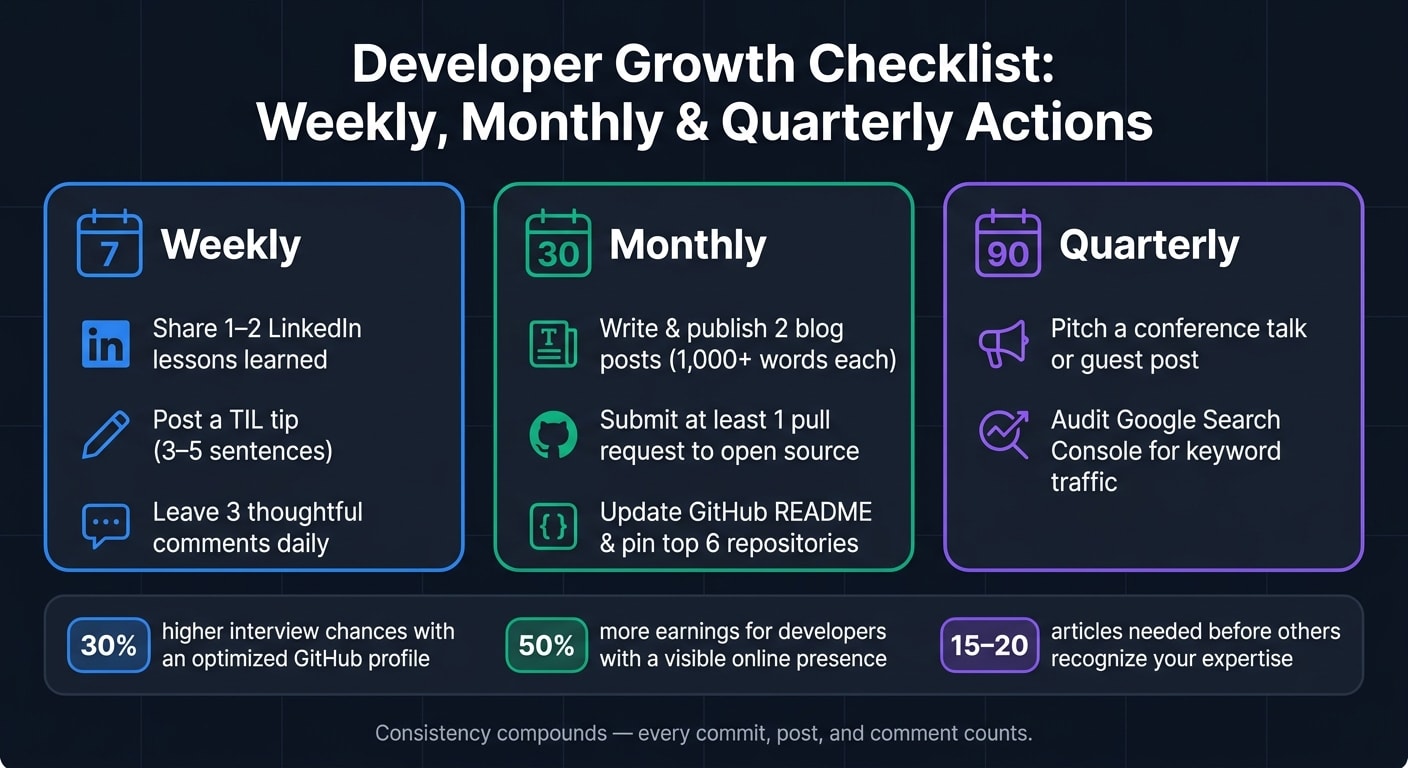
Once you’ve defined your key indicators, set up a system to regularly review your progress. Instead of trying to track everything all at once, break it down into manageable checkpoints: weekly, monthly, and quarterly. Here’s a simple framework to follow:
| Frequency | Action |
|---|---|
| Weekly | Share 1–2 LinkedIn lessons learned, post a TIL (Today I Learned) tip in 3–5 sentences, and leave 3 thoughtful comments daily . |
| Monthly | Write and publish 2 blog posts (1,000+ words each), submit at least 1 pull request to an open-source project, and update your GitHub README while pinning your top 6 repositories . |
| Quarterly | Pitch a conference talk or guest post and audit Google Search Console to check which keywords are leading people to your content . |
For those using daily.dev, Squad Analytics provides a snapshot of your total views, upvotes, and activity ranking over the last 30 days . It’s a great way to see how your contributions are being received by the community.
"Developers will keep coming back to sites that regularly and frequently publish content relative to the problems they want to solve." - Adam DuVander, Founder, EveryDeveloper
The idea isn’t to hit every single metric every week. Instead, use these reviews to figure out what’s working, focus more on those areas, and quietly let go of what isn’t.
Conclusion: Your Roadmap to Growing as a Developer Online
Your journey to growing as a developer online revolves around three key actions: building in public, sharing your knowledge, and connecting with the right communities.
This process isn’t about chasing fame or gaming algorithms. It’s about creating genuine value. Start by optimizing your GitHub profile and contributing to open-source projects you already use. Build a habit of writing with short "Today I Learned" (TIL) posts. Explore platforms like daily.dev to find curated content and engage with developer communities that align with your interests. Focus your efforts using the 80/20 rule - spend your time where it has the most impact. These steps not only enhance your visibility but can also lead to meaningful career opportunities.
Consistency is the secret ingredient. Over time, your efforts compound, establishing you as an authority in your niche. Research shows it often takes 15 to 20 articles for people to start recognizing your expertise . A well-maintained GitHub profile alone can boost your interview chances by 30%, and developers with a visible online presence often earn 50% more than peers with similar skills but no public profile .
Begin with small steps, stay consistent, and treat every commit, post, or comment as progress toward a stronger online presence. By following these strategies, you’re laying the groundwork for long-term growth and success in your developer career.
FAQs
What should I pin on GitHub if I don’t have big projects yet?
If you’re not working on large-scale projects, consider pinning repositories that demonstrate your progress and problem-solving abilities. Highlight repositories with clean, well-structured code, thorough documentation, or creative solutions to challenges. These could include open-source contributions, handy utility scripts, or documentation projects that reflect your ability to collaborate and clearly explain ideas. Think of your pinned repositories as a dynamic portfolio, showcasing the challenges you’re tackling and the skills you’re sharpening along the way.
How do I pick a niche to be “known for” online?
To pick a niche, aim to address specific challenges you've already faced, rather than simply focusing on your personal interests. Dive into your audience's struggles, analyze common search queries, and figure out where they spend their time online. Look for questions in your field that lack thorough answers - this is your chance to provide meaningful content. Tools like daily.dev can help you uncover trending topics that align with your skills and objectives, ensuring your knowledge aligns with what people genuinely need.
Which metrics actually show online developer career growth?
To keep tabs on online developer career growth, look at tangible results such as job offers, increased freelance rates, or even opportunities to become a co-founder.
When it comes to content and community growth, focus on engagement metrics like impressions, clicks, and time spent on the page. For audience building, monitor organic traffic, community interactions, and backlinks. As your efforts mature, more advanced metrics - like API activations or trial sign-ups - can provide insight into the professional influence of your work.