Read beyond your stack, study adjacent systems, follow diverse engineers, and apply insights to make better tradeoff decisions.
If I want better judgment as a developer, I need to change what I read, who I learn from, and how I use those ideas at work.
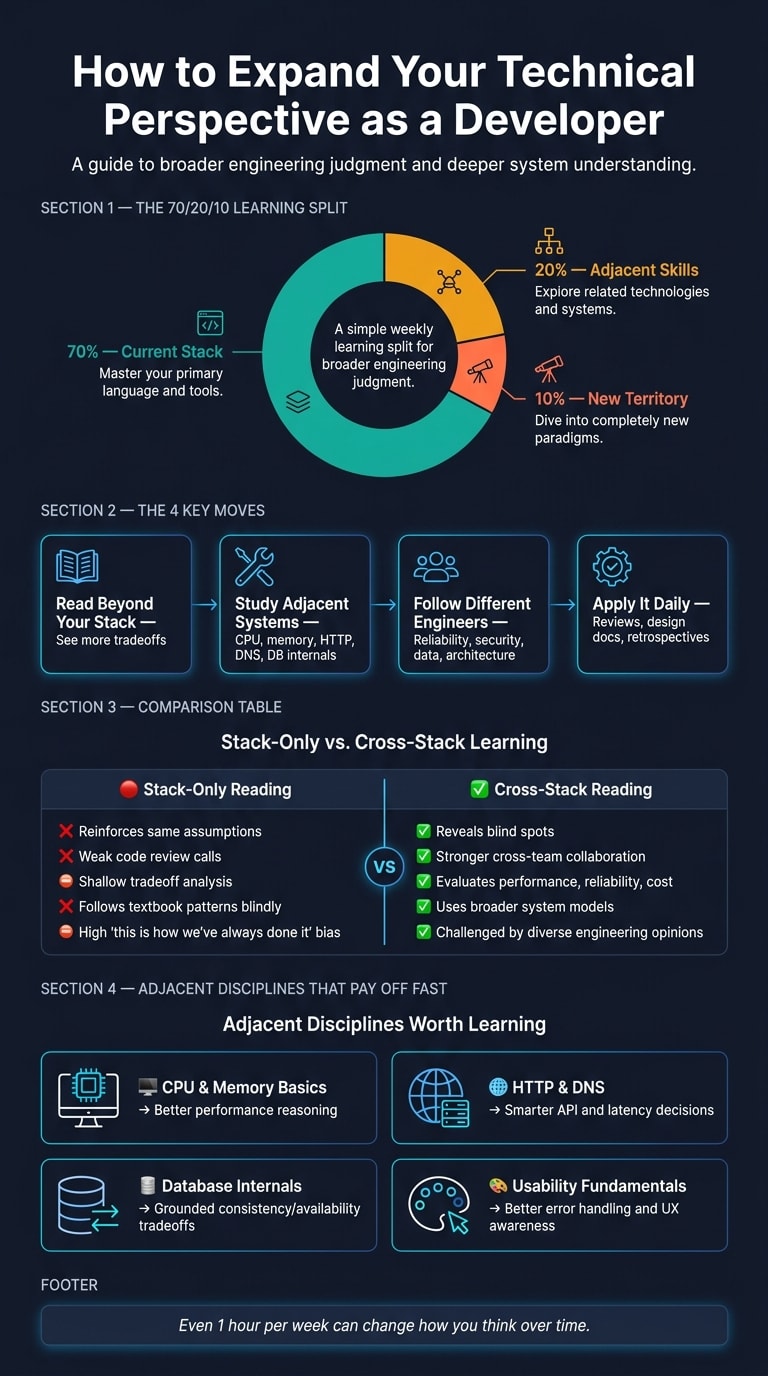
This article comes down to four moves: read beyond my stack, study nearby systems like networking, databases, and OS basics, follow engineers from other domains, and use that input in reviews, design work, and retros. The goal is not more tools. The goal is better tradeoff decisions.
A few points stand out fast:
- 70/20/10 is a simple learning split:
- 70% on my current stack
- 20% on nearby areas
- 10% on new territory
- Even 1 hour per week can change how I think over time
- Reading only inside one stack can lead to weak calls in:
- code review best practices
- debugging
- system design
- cross-team work
Here’s the short version:
- Stack-only reading keeps my default assumptions in place
- Cross-stack reading helps me see more options
- Adjacent subjects like CPU, memory, HTTP, DNS, and database internals help me reason from system behavior instead of guesswork
- Different voices from security, reliability, and data work push me past team habits
- Daily use matters most: broader input only helps if I apply it in reviews and planning
| Focus area | What I do | What changes |
|---|---|---|
| Reading | Go past my main stack | I see more tradeoffs |
| Study | Learn nearby systems | I make better calls under constraints |
| People | Follow engineers from other fields | I test my assumptions |
| Practice | Use this in reviews and design docs | My decisions get sharper over time |
In short: if I want to think like a stronger engineer, I should stop learning in a loop and start learning across systems.
Read outside your stack on purpose
Read outside your stack if you want to see more of the tradeoffs behind your work. The goal isn't to jump into random subjects and fill your head with noise. It’s to spend time on nearby areas that shape the choices you make every day.
Start with topics that sit just beyond your main stack. That’s usually where the best shift in perspective happens.
Pick adjacent topics that challenge your default assumptions
Read into adjacent systems: frontend if you build backend services, infrastructure if you ship application code, and data if your choices affect reporting or product logic.
The point isn't implementation trivia. Read to understand tradeoffs, constraints, and operating context. That’s where the payoff is. You start to see why another team made a call that looked odd at first glance, or why a clean idea on paper turns messy in production.
Use daily.dev to widen your feed instead of narrowing it
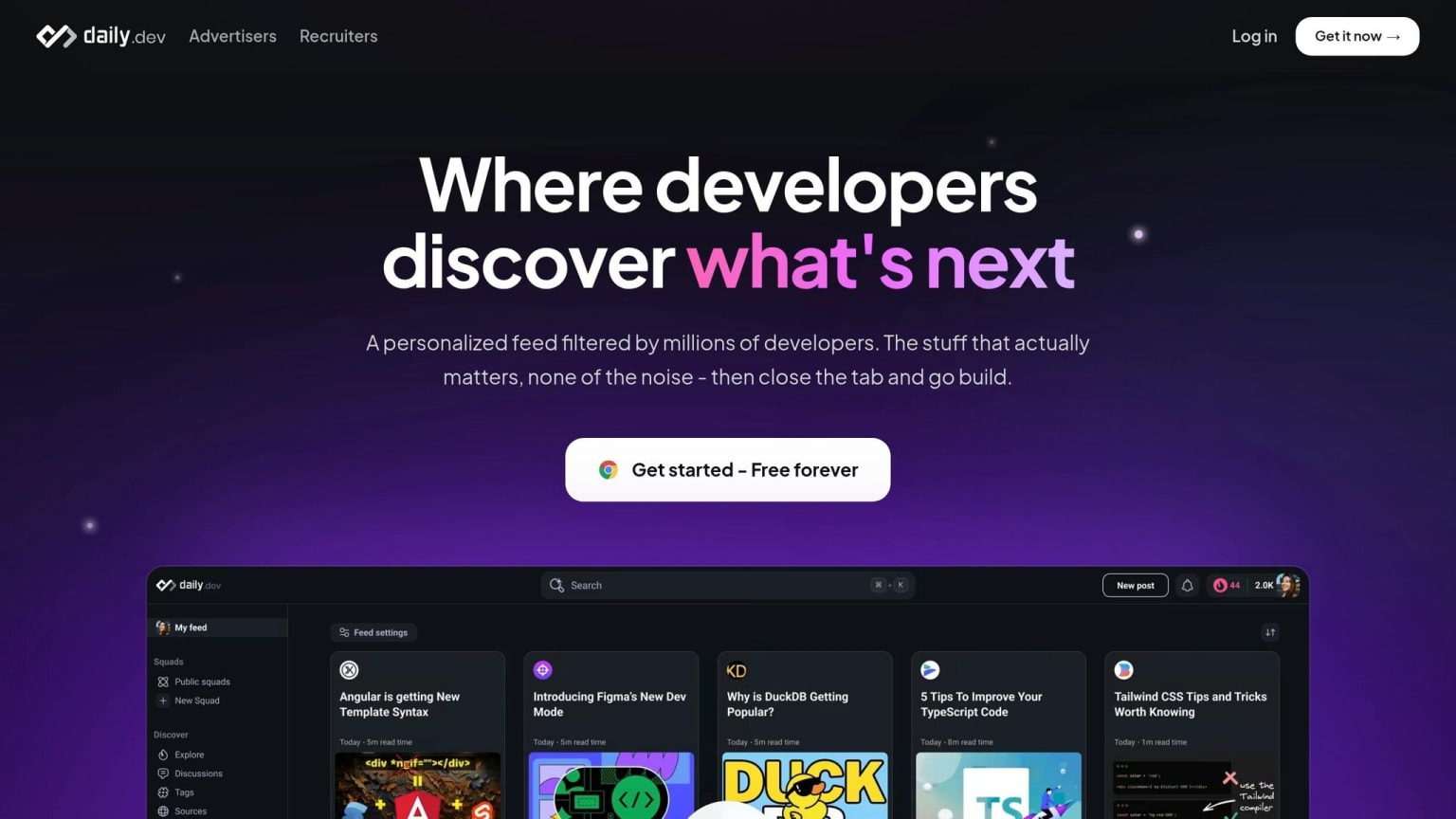
Use daily.dev to bring more range into your reading feed instead of making it narrower. It can surface engineering writing, architecture breakdowns, and discussions from outside your usual circles.
Tune the feed toward broader topics so it shows ideas you probably wouldn’t search for on your own. That matters. Most of us look for things that match what we already know. A broader feed breaks that habit a bit.
Once your reading starts to span stacks, push it into the fields that shape software choices too.
Stack-only reading vs. cross-stack reading
This changes how you think, not just what you know.
Stack-only reading tends to reinforce the same assumptions. Cross-stack reading gives you more options, helps you spot blind spots, and makes it easier to work across teams and systems.
Learn the adjacent disciplines that shape software
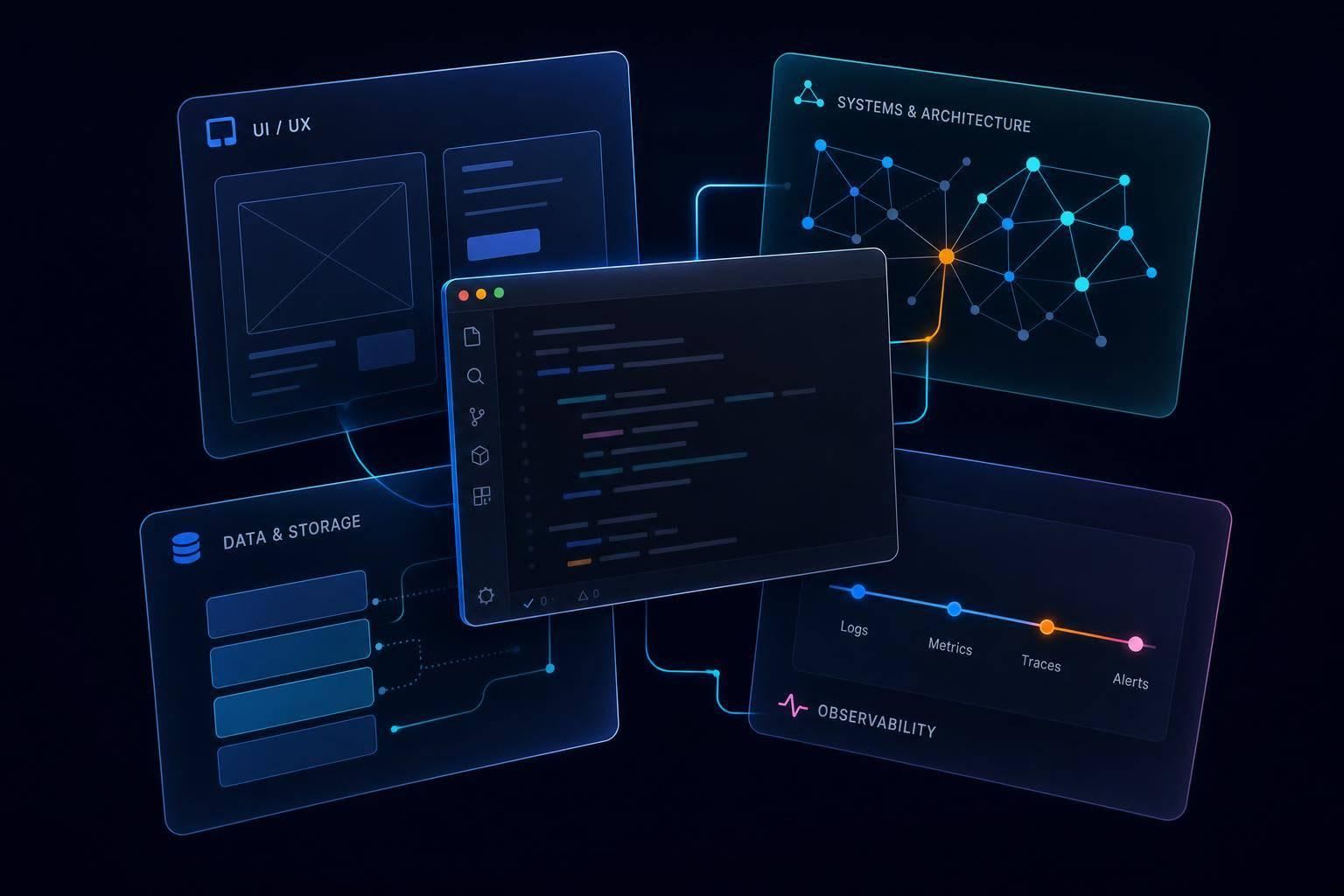
Once you can read across stacks, go one level deeper. Learn the disciplines underneath them. Go beyond the stack itself and study the things that shape how software behaves: hardware, networking, operating systems, databases, and product constraints.
Start with the disciplines that affect your decisions most
Start with the areas tied to your current blind spots. The best order depends on what you build.
A few topics tend to pay off fast for most developers:
- CPU and memory basics help you reason about performance without guessing. When you understand memory management and concurrency, you write and profile code differently.
- HTTP and DNS make network behavior easier to understand. That shows up in API design, latency debugging, and how services communicate.
- Database internals - especially indexing, transactions, and storage engine behavior - help you talk about consistency, availability, and partition tolerance in a grounded way instead of just going with the defaults.
- Usability fundamentals matter more than many backend developers think. If you learn the basics of usability and browser rendering, you can see how code changes affect error handling and the user experience.
The goal here isn't specialization. It's fluency. You want enough range to spot patterns and know when it's time to dig deeper.
Build a lightweight learning routine you can keep up
You don't need a huge study plan. A light routine is often enough to build range over time. Set aside one hour each week or a half-day every two weeks for exploration - try a new tool, read a paper, or dig into a system you don't usually touch .
The 70/20/10 rule gives you a simple way to split that time: 70% of your learning goes to your current stack, 20% goes to adjacent skills like DevOps, databases, or frontend based on your role, and 10% goes to completely new territory .
You can also use daily.dev to find explainers and case studies across systems design, databases, DevOps, and product thinking.
Pure coding focus vs. coding plus adjacent disciplines
The gap between these two approaches shows up most clearly in decision quality over time, not just in what someone knows.
| Pure Coding Focus | Coding + Adjacent Disciplines | |
|---|---|---|
| Performance reasoning | Focuses on code-level optimizations | Understands hardware constraints, CPU/memory basics, and caching behavior |
| Architecture decisions | Follows textbook patterns without much context | Uses broader system models to visualize dependencies and tradeoffs |
| Tradeoff analysis | Shallow; focuses on what seems correct or familiar | Evaluates tradeoffs across performance, reliability, simplicity, scalability, and cost |
This kind of range also helps you judge ideas from engineers with different backgrounds. And in practice, that's where a lot of growth happens: you can learn more from people who see the system in a different way.
Follow engineers who think differently and broaden your perspective
Who you learn from shapes your judgment just as much as what you read. If everyone in your feed works on the same kind of problems you do, you start reinforcing the same assumptions - even if you're reading all the time.
Follow voices from different domains, not just your niche
Once you've expanded what you read, expand who you learn from too.
Different domains bring different tradeoffs, and tradeoffs sharpen judgment. A reliability engineer sees failure very differently from a feature developer. A security engineer looks at trust boundaries many developers barely notice. It helps to follow engineers writing about reliability, security, data systems, and long-term architecture. Their constraints are different enough from yours to push back on your default way of thinking.
Gergely Orosz writes about organizational dynamics and staff-level tradeoffs at The Pragmatic Engineer. Alex Xu's ByteByteGo, which reaches millions of developers, focuses on large-scale system design with visual explanations that make complex tradeoffs easier to reason about . Engineering blogs from companies like Stripe, Cloudflare, and Discord also show how production constraints change design decisions.
The next move is simple: make sure your feed actually brings those voices to you.
A broad feed surfaces ideas you would not find on your own
The main issue with a narrow feed is simple. If you only follow engineers who think like you, you keep hearing stronger versions of what you already believe.
The upside of following different engineers is that their questions, failures, and design choices bring in problems you haven't run into yet. That's where growth happens. You stop treating your current stack like the center of the world.
Use broader tags and communities to find problems outside your usual stack. That shift - from a feed that mirrors your current work to one that includes unfamiliar tradeoffs - is how algorithmic sameness gets broken .
Local team perspective vs. broad public engineering perspective
You can see this difference in practice. It shows up in how your team solves problems day to day, and in how you judge ideas from the larger engineering world during design reviews, incident analysis, and architecture discussions.
| Team View | Public View | |
|---|---|---|
| Solution Variety | Limited to the current stack and internal conventions | Cross-domain patterns and approaches from different industries |
| Risk Awareness | Known internal bugs and immediate sprint blockers | Cascading failures and lessons from industry post-mortems |
| Exposure to New Practices | Slow adoption; relies on internal consensus | Early discovery of emerging tools and contrarian takes from senior engineers |
| Bias Check | High susceptibility to "this is how we've always done it" | Challenged by different domain constraints and diverse engineering opinions |
Apply a broader perspective in your everyday engineering work
Once you widen what you read and who you follow, the next step is simple: use those ideas in the choices you make every week. Put broader reading to work in the places where decisions take shape - code reviews, design sessions, and retrospectives.
Bring cross-perspective habits into reviews, design, and retrospectives
Volunteer to review code outside your usual area - an API you don't own, a frontend component you rarely touch, or an infrastructure change you'd normally skip. That kind of review helps you see how other parts of the system fit together. Over time, system dependencies become easier to spot, and you start to see how your choices affect more than just your corner of the codebase.
In design sessions, don't rush to the first answer. Read the design doc first. Then pin down the constraints and tradeoffs before you pitch a solution. If you've seen a similar case elsewhere, bring it into the discussion as a concrete reference point instead of arguing in the abstract. After each sprint, ask which assumption turned out to be wrong. That one question can surface blind spots fast.
Ad hoc decisions vs. structured decisions
Ad hoc decisions favor speed. Structured decisions make risk easier to see, help teams reuse what works, and keep choices tied to user and business needs.
Conclusion: read more broadly, study adjacent systems, and practice better tradeoffs
The point of broader reading is better judgment in day-to-day work. Better judgment comes from wider inputs: read beyond your stack, learn adjacent systems, follow different thinkers, and use daily.dev to keep those perspectives in view.
FAQs
How do I choose adjacent topics to study first?
Start with domains that sit close to the work you already do. If you’re a backend engineer, that might mean frontend. If you build applications, it could mean infrastructure.
A simple way to split your time is the 70/30 rule: spend 70% on your main field and 30% on nearby areas like DevOps, databases, or security.
That split helps you grow without getting pulled in too many directions at once. And when you choose what to learn, aim for topics tied to problems you’re dealing with now, not whatever the industry is buzzing about this week.
How can I apply broader learning without slowing down my work?
Use structured, intentional learning. Set aside a fixed block of time, like 30 minutes each morning or a weekly 30- to 45-minute review, so you can stay informed without getting pulled into nonstop distractions.
A tool like daily.dev can help. Curate the tags that match your goals, keep a 70/30 split between your main field and nearby areas, and then put what you learn to work through side projects.
That last part matters more than it sounds. Reading is useful, but building something with a new idea is what helps it stick. Even a small side project can turn a passing concept into something you can actually use.
How do I use daily.dev to break out of my filter bubble?
Use daily.dev to widen what you see beyond your current stack. A simple way to do that is to set it as your browser’s new tab page, then use Feed Settings to shape the mix of categories you get, like news, opinions, and tutorials. You can also fine-tune your tags so they include topics that sit outside your usual lane.
That matters more than it may seem. If you only read about the tools you already use, it’s easy to end up in a bubble. Adding a few nearby or unfamiliar topics can help you spot ideas, workflows, and shifts you may have missed.
It also helps to spend time in the Happening Now hub and join Squads. Those spaces give you a better sense of how other engineers think, what tools they’re trying, and which trends are starting to get traction.