Learn how impact mapping aligns product backlogs with business goals and why stakeholder involvement is crucial. Discover the differences between impact mapping and regular backlog management.
Impact mapping and regular backlog management are two methods for aligning product backlogs with business goals. Here's a quick comparison:
| Method | Focus | Stakeholder Involvement | Link to Business Goals |
|---|---|---|---|
| Impact Mapping | Visual, goal-oriented | High | Direct, explicit |
| Regular Backlog Management | Feature-oriented | Varies | Indirect, often implicit |
Key points:
- Impact mapping creates a visual map linking features to business goals
- Regular backlog management focuses on prioritizing features
- Both methods involve stakeholders, but impact mapping encourages more active participation
- Impact mapping provides clearer traceability between backlog items and business objectives
- Regular backlog management is simpler but may miss important connections
Choose impact mapping for better goal alignment and stakeholder engagement. Use regular backlog management for a simpler, more familiar approach.
Related video from YouTube
How Each Method Supports Business Goals
Impact mapping and regular backlog management help align product backlogs with business goals in different ways. Let's look at how each method works:
Impact Mapping
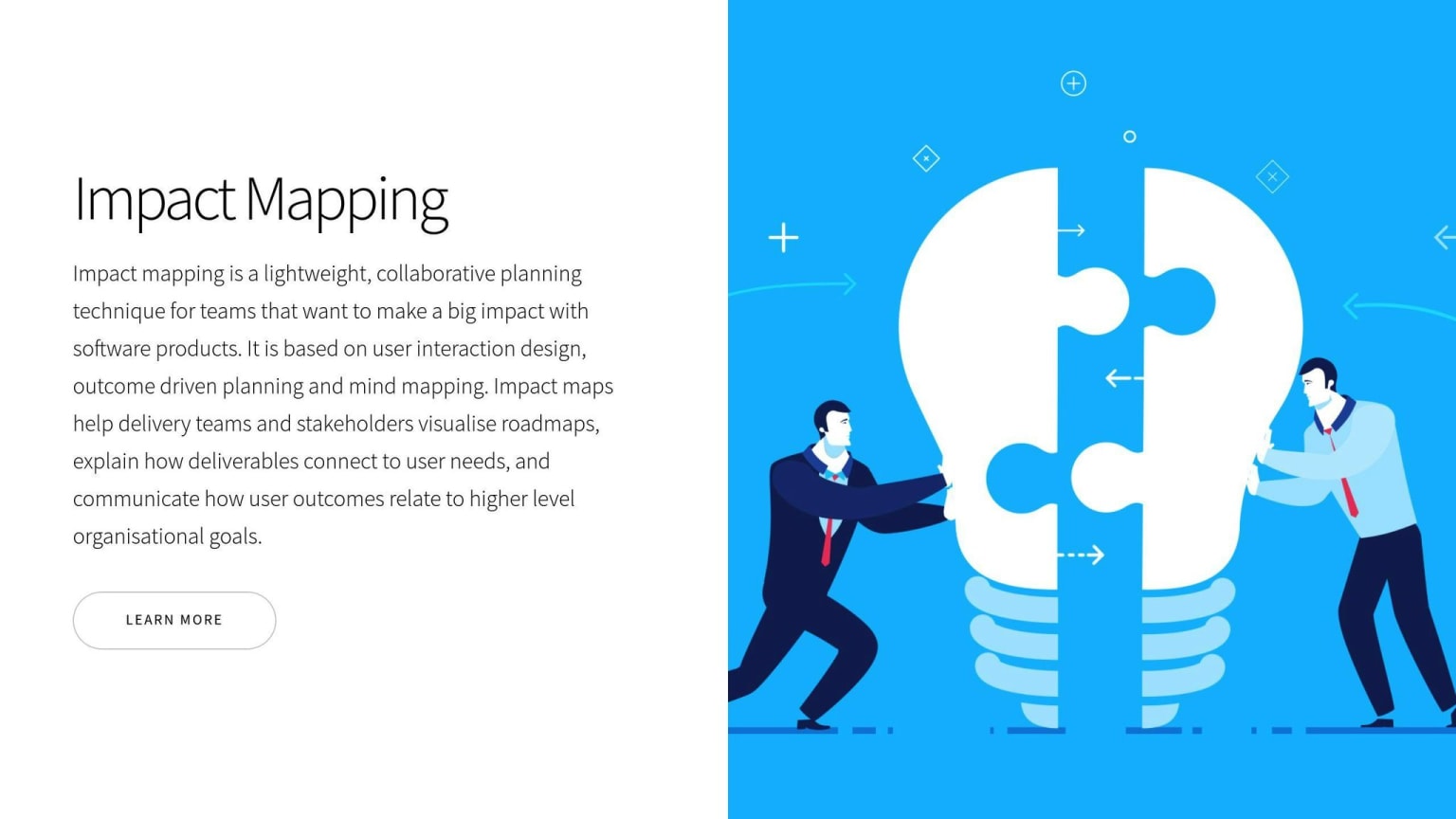
Impact mapping is a visual method that links features directly to business goals. It creates a map showing how features connect to the main goal. This helps teams choose features based on how much they help reach business goals, not just on how easy they are to make or what customers ask for.
For example, if a company wants to increase sales by 20%, an impact map would show which features could help do this, like:
- Making the website easier to use
- Improving how people search for products
- Making it faster to buy things
By focusing on what each feature does for the business, teams can work on things that really matter.
Regular Backlog Management
Regular backlog management is more about listing features. Teams choose what to work on based on:
- How easy it is to make
- What customers want
- How much value it might bring
This method can work well, but it might not always line up with business goals. Teams might end up with a long list of features that don't all help reach the main business goals.
For instance, a team might work on things customers ask for without thinking about whether these things fit with the company's big plans. This could lead to a product that makes customers happy but doesn't help the company reach its goals.
Here's a table comparing the two methods:
| Aspect | Impact Mapping | Regular Backlog Management |
|---|---|---|
| Focus | Business goals | Features |
| How it works | Creates a visual map | Makes a list of features |
| Choosing what to do | Based on impact on goals | Based on various factors |
| Link to business goals | Direct and clear | Might be unclear |
| Risk | Might miss some customer wants | Might not help reach business goals |
How Stakeholders Take Part
Stakeholders play a key role in both impact mapping and regular backlog management. Their input helps make sure the product backlog fits with business goals and what customers need.
Impact Mapping
In impact mapping, stakeholders help create the map. This helps them see how their goals link to specific features. By working together, teams can:
- Spot possible problems early
- Change the product backlog as needed
- Keep stakeholders interested in the outcome
Regular Backlog Management
In regular backlog management, stakeholders may not be as involved in choosing what to work on. But it's still important to talk to them often. This keeps the product backlog on track with business goals.
Ways to Involve Stakeholders
Here are some ways to get stakeholders involved:
| Method | Description |
|---|---|
| Kick-off workshops | Invite stakeholders to help start the project |
| Regular meetings | Hold product strategy meetings to review and update plans |
| Sprint reviews | Ask stakeholders to attend and give feedback |
| Open communication | Share information freely to build trust |
Linking Backlog Items to Business Goals
Both impact mapping and regular backlog management link backlog items to business goals, but they do it differently. Let's look at how each method works and why clear links matter.
Impact Mapping
Impact mapping makes clear connections between backlog items and business goals. It uses a visual map to show how features help reach business aims. This helps teams:
- Pick tasks that have the most impact
- Focus on what's important for the business
- Spot and fix problems early
When stakeholders help make the map, everyone understands the goals better.
Regular Backlog Management
Regular backlog management often doesn't show clear links between items and business goals. But it can still work well if teams:
- Check the backlog often
- Update it to match business needs
- Ask stakeholders which tasks matter most
Why Clear Links Matter
It's important to show how backlog items help business goals. This helps teams:
- Work on the right things
- Use time and money well
- Get better results
Without clear links, teams might work on things that don't help the business. This can waste time and effort.
Here's a table comparing the two methods:
| Aspect | Impact Mapping | Regular Backlog Management |
|---|---|---|
| How it links items to goals | Clear visual map | Often unclear |
| Ease of seeing connections | Easy | Can be hard |
| Stakeholder involvement | High | Varies |
| Risk of misalignment | Low | Higher |
| Flexibility | Can adjust quickly | May need more effort to change |
In the next part, we'll look at how to keep the backlog in line with business goals when things change.
Adapting to Changes
When business goals or market conditions shift, the product backlog needs to change too. Impact mapping and regular backlog management handle changes differently.
Impact Mapping
Impact mapping uses a visual map to link features to business goals. This makes it easy to update when goals change. Teams can quickly focus on new priorities and make sure everyone understands the updated goals.
Regular Backlog Management
Regular backlog management can also change, but it might take more work. Teams need to check and update the backlog often to keep it in line with business goals. This means:
- Picking the most important items
- Taking out or storing less important items
- Updating the backlog to fit new needs or changes
Key Points for Handling Changes
Here's how teams can handle changes well:
| Action | Description |
|---|---|
| Check often | Look at the backlog regularly to make sure it fits business goals |
| Pick what's important | Focus on high-value items and remove or store less important ones |
| Update for new needs | Change the backlog to fit new requirements or shifts in the market |
| Work with stakeholders | Get input from key people to make sure everyone agrees on new goals |
| Use good tools | Pick platforms that help manage and share the backlog, making it easier for everyone to work together |
1. Impact Mapping
Alignment with Business Goals
Impact mapping helps teams match their product backlog with business goals. It uses a picture to show how features link to what the business wants. This helps teams pick features that matter most, not just ones they think might work.
Stakeholder Involvement
Impact mapping gets everyone involved - business owners, developers, testers, and users. When all these people work together, they understand the business goals better. This teamwork helps make the product backlog better by adding different views and ideas.
Traceability
Impact mapping makes it easy to see how each feature helps the business. This clear link helps teams:
- Choose which features to work on first
- Make smart choices about what to build
- Show how their work helps the company
Flexibility
Impact mapping can change when business goals or markets change. Teams can look at the map often and update it. This helps them:
- React quickly to new situations
- Keep their work in line with what the business needs
- Stay on track even when things change
Here's a table comparing impact mapping to regular backlog management:
| Feature | Impact Mapping | Regular Backlog Management |
|---|---|---|
| Goal Focus | Directly links features to goals | May not clearly show how features help goals |
| Team Understanding | Everyone sees how their work matters | Teams might not see the big picture |
| Adapting to Changes | Easy to update and shift focus | Can be harder to change direction |
| Choosing What to Build | Based on impact on business goals | Might be based on other factors |
2. Regular Backlog Management
Regular backlog management is about sorting and picking what to work on next. Teams look at things like:
- How much value it brings
- How hard it is to do
- How risky it is
- What needs to be done first
Teams often use ways to group items, like:
- Must-haves
- Should-haves
- Could-haves
- Won't-haves
They might also use other methods to decide what's most important.
How It Fits with Business Goals
Regular backlog management tries to match work with what the business wants. But sometimes, it's not clear how each task helps the business. This can lead to doing things that don't really help the company's main goals.
How People Work Together
Business owners, developers, testers, and users all help with regular backlog management. But they might not be as involved as they could be. Often, they just say what they think is important or help make tasks clearer.
Seeing How Things Connect
It can be hard to see how each task helps the business with regular backlog management. This makes it tough to:
- Choose what to do first
- Show how the work helps the company
Changing When Needed
Regular backlog management doesn't change as easily as impact mapping when business goals or markets shift.
Here's a table comparing regular backlog management and impact mapping:
| Feature | Regular Backlog Management | Impact Mapping |
|---|---|---|
| Focus | Tasks and features | Business goals |
| Seeing connections | Can be unclear | Clear visual links |
| Changing plans | Can be slow | Quick and easy |
| Picking what to do | Based on various factors | Based on business impact |
| Team understanding | Might miss the big picture | Everyone sees how work matters |
Strengths and Weaknesses
Impact mapping and regular backlog management each have good and bad points. Here's a table that shows how they're different:
| Feature | Impact Mapping | Regular Backlog Management |
|---|---|---|
| Main focus | Business goals | Tasks and features |
| Showing links | Clear pictures | Often unclear |
| Changing plans | Fast and easy | Can be slow |
| Choosing work | Based on business impact | Based on many things |
| Team understanding | Everyone sees why work matters | Might not see the big picture |
Impact Mapping
Good points:
- Focuses on business goals
- Shows clear links between work and goals
- Easy to change when needed
- Helps teams see why their work matters
Bad points:
- Takes more work to make and keep up
Regular Backlog Management
Good points:
- Simple to use
- Many teams know how to do it
Bad points:
- Links between tasks and goals can be unclear
- Can be slow to change
- Teams might not see how their work helps the company
Both methods can help teams manage their work, but they do it in different ways. Impact mapping is better for seeing the big picture, while regular backlog management is simpler but might miss some important connections.
Wrap-up
Impact mapping helps teams make sure their work fits with what the business wants. It shows how tasks link to business goals using a picture. This helps teams:
- Pick the right things to work on
- Work together better
- Come up with new ideas
Here's how impact mapping compares to regular backlog management:
| Feature | Impact Mapping | Regular Backlog Management |
|---|---|---|
| Focus | Business goals | Tasks and features |
| Showing links | Clear pictures | Often unclear |
| Changing plans | Quick and easy | Can be slow |
| Picking work | Based on what helps the business | Based on many things |
| Team understanding | Everyone sees why work matters | Might not see the big picture |
Impact mapping is good for:
- Seeing the big picture
- Making sure work helps the business
- Changing plans quickly
Regular backlog management is:
- Simple to use
- Well-known by many teams
But it might not show how tasks help the business as clearly.
FAQs
What is impact mapping PMP?
Impact mapping is a way to plan what features to add to a product. It starts with the main goal and then shows how each feature helps reach that goal. This method:
- Begins with the end goal in mind
- Links features directly to the goal
- Shows why each feature is important
Here's a simple breakdown:
| Step | Description |
|---|---|
| 1. Set the goal | Define what you want to achieve |
| 2. Identify actors | List who can help or hinder the goal |
| 3. Find impacts | Determine how actors can affect the goal |
| 4. Choose features | Pick features that create the right impacts |
This approach helps teams focus on building things that really matter for the business. It makes it easy to see how each part of the work helps reach the main goal.