
Compare Kubernetes CNIs Flannel, Calico, and Canal. Learn about performance, security, and scalability for different cluster sizes. Choose the best CNI for your needs.
Choosing the right Container Network Interface (CNI) is crucial for Kubernetes cluster performance, security, and reliability. Here's a quick comparison of Flannel, Calico, and Canal:
| Feature | Flannel | Calico | Canal |
|---|---|---|---|
| Ease of use | Easiest | Complex | Moderate |
| Performance | Good | Best | Very good |
| Security | Basic | Advanced | Advanced |
| Scalability | Limited | Excellent | Very good |
| Best for | Small to medium clusters | Large, security-focused clusters | Balance of performance and ease |
Key takeaways:
- Flannel: Simple setup, good for smaller clusters
- Calico: Advanced features, best for large-scale deployments
- Canal: Combines Flannel and Calico, offering a middle ground
Choose based on your cluster size, security needs, and technical expertise.
Related video from YouTube
1. Flannel
Network Performance
Flannel is a simple networking option for Kubernetes clusters. It uses UDP to send data, which can be slower and less reliable than other options. However, Flannel works well for many uses, especially when speed isn't the top priority.
Scalability
Flannel can handle large Kubernetes clusters. It uses a system where each part of the cluster has its own Flannel agent. These agents talk to a main Flannel server to manage the network. This setup allows Flannel to work with thousands of nodes in one cluster.
Deployment Complexity
Flannel is easy to set up. You can start it using a simple YAML file, and you don't need any extra tools. This makes it good for people who want to set up a Kubernetes cluster quickly without dealing with complex network settings.
| Feature | Description |
|---|---|
| Network Type | UDP-based |
| Cluster Size | Can handle thousands of nodes |
| Setup | Simple YAML file, no extra tools needed |
Flannel is a good choice if you want an easy-to-use network for your Kubernetes cluster. While it may not be the fastest option, it's simple to set up and can work with large clusters.
2. Calico
Network Performance
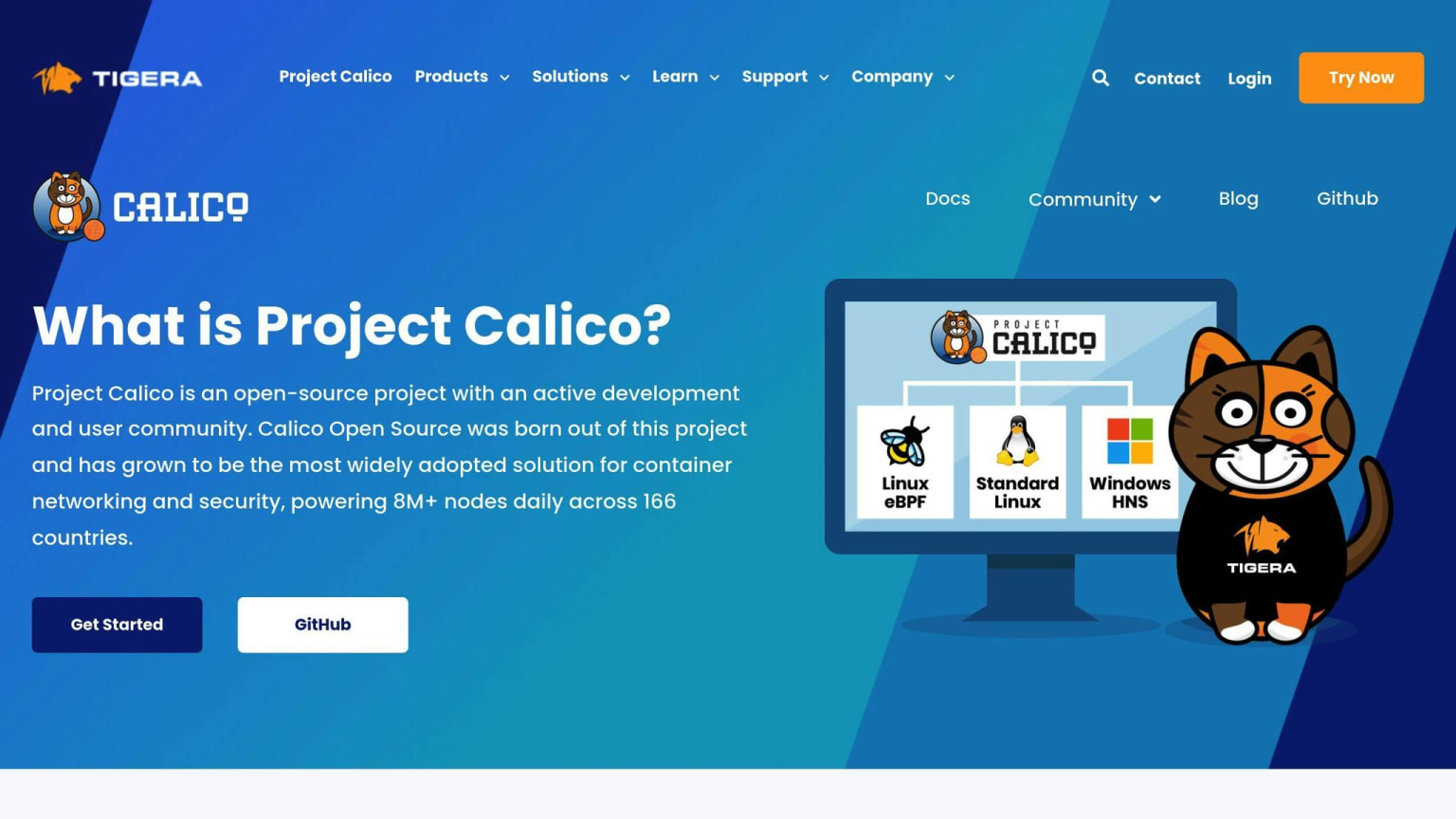
Calico uses IP-in-IP tunneling and BGP routing for Kubernetes networking. This setup gives Calico better speed and less delay than Flannel, especially in big clusters.
Scalability
Calico works well for large Kubernetes clusters. It uses a spread-out system where each node runs a Calico agent that talks to the main Calico control center. This lets Calico handle thousands of nodes in one cluster.
Security Features
Calico offers strong security options:
- Network rules to control traffic between pods
- Data encryption
- User authentication
These features make Calico popular with big companies that need tight security.
Deployment Complexity
Setting up Calico is harder than Flannel. You need to know more about networking, like BGP routing. But Calico gives you tools and guides to help make setup easier.
| Feature | Calico Details |
|---|---|
| Network Type | IP-in-IP tunneling with BGP routing |
| Cluster Size | Can handle thousands of nodes |
| Security | Network rules, encryption, user checks |
| Setup | Harder than Flannel, needs network know-how |
Calico is good if you want fast networking with strong security. It's harder to set up than Flannel, but it works well for big companies with large clusters.
3. Canal
Network Performance
Canal combines Calico and Flannel for Kubernetes networking. It uses:
- Calico's networking model
- Flannel's networking backend
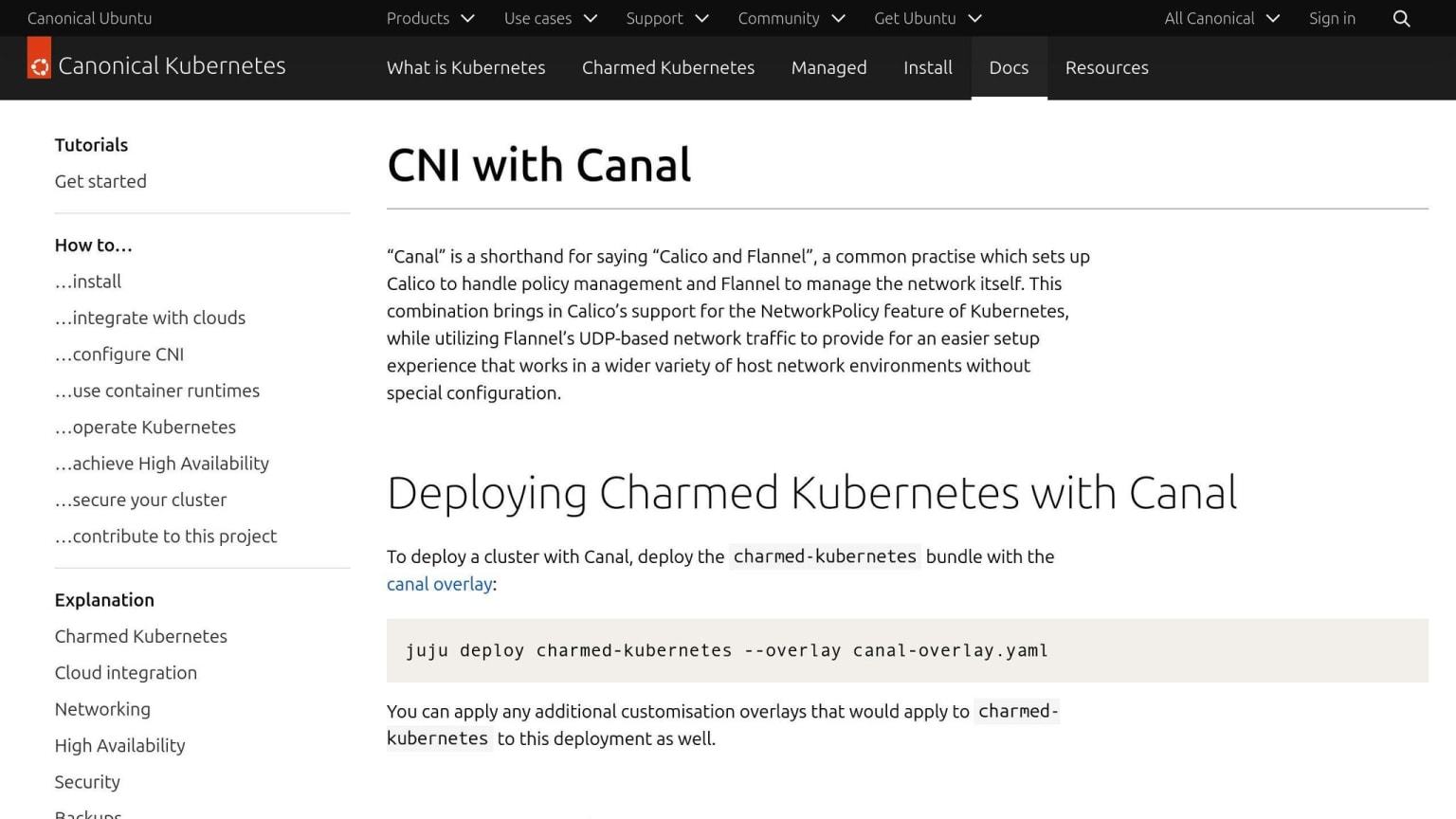
This mix aims to balance good performance with ease of use. Canal manages network policies and isolation using Calico, while Flannel handles the basic networking.
Scalability
Canal can handle big Kubernetes clusters. It uses:
- Calico's control plane for network policies and isolation
- Flannel for basic networking
This setup allows Canal to work well in large setups.
Security Features
Canal offers strong security:
- Network policies
- Network isolation
- Encryption
- User checks
It uses Calico's model for policies and isolation, with Flannel managing the network underneath.
Deployment Complexity
Setting up Canal is easier than Calico but harder than Flannel alone. You'll need some networking knowledge, especially about Calico's model. Canal provides help tools and guides for setup.
| Feature | Canal Details |
|---|---|
| Network Type | Calico model + Flannel backend |
| Cluster Size | Works with large clusters |
| Security | Policies, isolation, encryption, user checks |
| Setup | Easier than Calico, needs some network know-how |
Canal is good if you want a mix of good network performance and simpler setup. It has strong security and is easier to deploy than Calico on its own.
Strengths and Weaknesses
Overview of CNI Providers
Each CNI option has good and bad points. Knowing these helps you pick the right one for your Kubernetes cluster.
Flannel, Calico, and Canal: Pros and Cons
| CNI | Pros | Cons |
|---|---|---|
| Flannel | • Simple setup • Works well for small/medium clusters • Supports different network types |
• Not for big clusters • Basic network rules • Less safe than others |
| Calico | • Works for big clusters • Strong network rules • Good safety features |
• Hard to set up • Needs network know-how • Not as simple as Flannel |
| Canal | • Mix of Calico and Flannel good points • Works well and for big clusters • Strong network rules |
• Hard to set up • Needs to know both Calico and Flannel • Not as simple as Flannel |
How They Compare
| Feature | Flannel | Calico | Canal |
|---|---|---|---|
| Easy to Use | Yes | No | No |
| Works for Big Clusters | No | Yes | Yes |
| Network Rules | Basic | Strong | Strong |
| Safety | Basic | Good | Good |
| Speed | Good | Fast | Fast |
This table shows how Flannel, Calico, and Canal stack up against each other. It helps you see which one might work best for what you need.
Summary
When picking a Kubernetes CNI provider, think about what your cluster needs. Here's a quick look at Flannel, Calico, and Canal:
Picking the Right CNI
Use this table to help you choose the best CNI for your needs:
| Cluster Size | Network Rules | Ease of Use | Best CNI Choice |
|---|---|---|---|
| Small to medium | Basic | Very easy | Flannel |
| Large | Strong | Harder | Calico or Canal |
| Any size | Strong | Medium | Canal |
Main Points
| CNI | Best For | Network Rules | Setup |
|---|---|---|---|
| Flannel | Small to medium clusters | Basic | Easy |
| Calico | Large clusters | Strong | Hard |
| Canal | Mix of easy use and good rules | Strong | Medium |
Remember:
- Flannel is easy to use but has basic features
- Calico is harder to set up but works well for big clusters
- Canal mixes Calico and Flannel, giving you both easy use and good network rules
Pick the CNI that fits your cluster size, network needs, and how much time you can spend setting it up.
FAQs
What is the alternative to Flannel in Kubernetes?
Project Calico is a good option instead of Flannel for Kubernetes networking. While Flannel is simple, Calico offers more features and works well for bigger setups.
How do you choose a CNI?
When picking a CNI (Container Network Interface), think about:
| Factor | Description |
|---|---|
| Speed | How fast the network runs |
| Safety | What security features it has |
| Size | How big a cluster it can handle |
| Ease of use | How easy it is to set up and use |
| Fit | How well it works with your Kubernetes setup |
Look at these things to find the CNI that works best for your cluster.
What is the difference between weave and Flannel?
Weave Net and Flannel are both for Kubernetes networking, but they work differently:
| Feature | Flannel | Weave Net |
|---|---|---|
| Type | Simple, basic networking | Mesh overlay network |
| Setup | Easy to use | Easy to install and set up |
| Best for | Basic needs | More complex networking needs |
Flannel is good for simple setups, while Weave Net works well when you need more from your network.