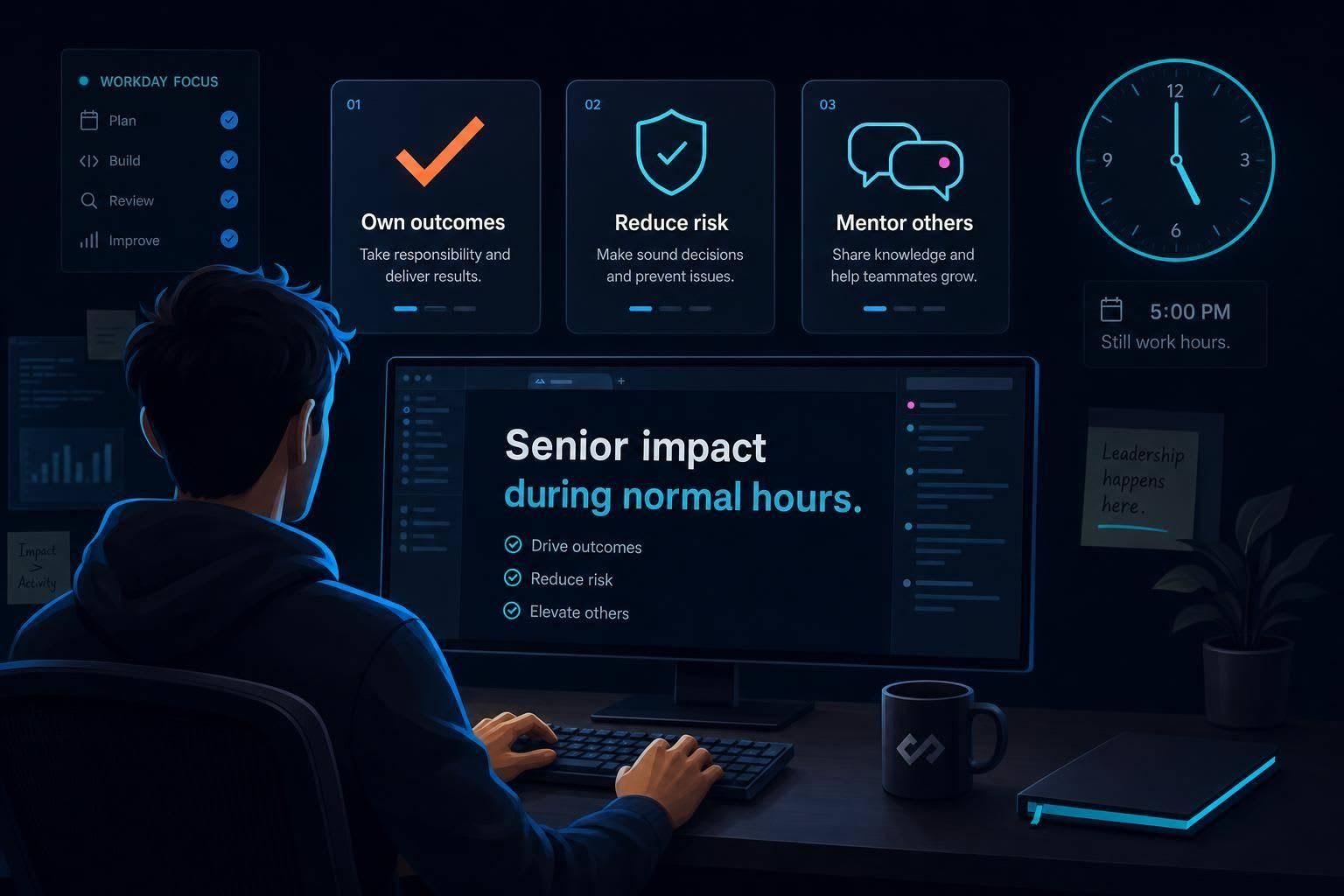
Seniority isn't built on side projects — it's earned by owning outcomes, reducing risk, and mentoring within your workday.
No - you do not need side projects to become a senior developer. Seniority comes from what you do at work: owning outcomes, making sound calls, cutting down risk, writing clear docs, helping teammates, and keeping projects on track.
Here’s the short version:
- Side coding is optional, not a job requirement
- Senior developers reduce risk and confusion
- Ownership matters more than extra GitHub activity
- Mentoring, docs, reviews, and planning count as senior work
- You can grow during work hours
- You can stay current without giving up nights or weekends
- Rest helps judgment, focus, and code quality
A few points stand out right away:
- Many senior engineers spend 30% to 50% of their time on work that is not pure coding, like planning, code review, design docs, and helping others
- The jump from mid-level to senior is often about scope of ownership, not just coding speed
- Side-project pressure can hit people unevenly, especially those with caregiving work, limited free time, or another job
The main idea is simple: if you want to grow into a senior role, focus less on coding after hours and more on how you think, decide, and support your team from 9:00 AM to 5:00 PM.
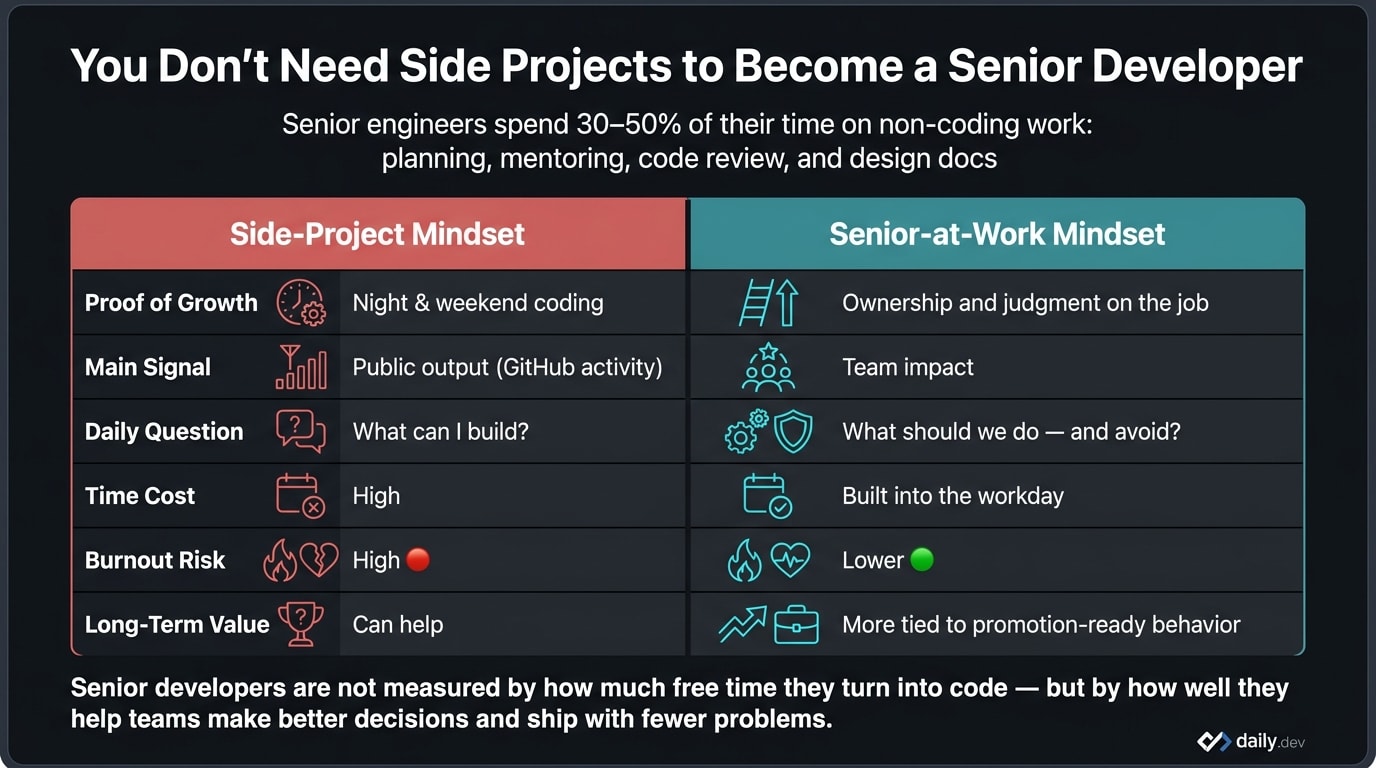
Quick comparison
| Focus | Side-project mindset | Senior-at-work mindset |
|---|---|---|
| Proof of growth | Night and weekend coding | Ownership and judgment on the job |
| Main signal | Public output | Team impact |
| Daily question | “What can I build?” | “What should we do, and what should we avoid?” |
| Time cost | High | Built into the workday |
| Burnout risk | High | Lower |
| Long-term value | Can help | More tied to promotion-ready behavior |
If I had to sum up the whole article in one line, it would be this: senior developers are not measured by how much free time they turn into code, but by how well they help teams make better decisions and ship with fewer problems.
What actually makes someone a senior developer
Senior developers cut down risk, confusion, and wasted effort through the calls they make on the job.
Technical depth, ownership, and good judgment at work
Being senior has less to do with how much you know and more to do with the problems you stop before they spread. As engineering leader Daniil Kornilov puts it:
"Senior developers are not defined by how much they know. They are defined by how they reduce risk, ambiguity, and waste."
That shows up in plain, day-to-day ways. A senior developer spots a scaling issue before the team builds the wrong solution and has to do the work twice. They call out a deadline that doesn't make sense before it turns into a fire drill. And sometimes, the smartest move is not writing code at all .
As teams use more AI, this matters even more. The job shifts away from typing every line by hand and toward making sound calls about what to automate, what to delay, and what to cut. In other words, seniority shows up in how you work each day, not just in what you ship after hours.
A senior engineer also takes a project from design through delivery and speaks up early when something is slipping .
Communication, mentorship, and team leverage
Senior engineers spend a big part of their time reviewing work, writing decision docs, mentoring teammates, and clearing blockers for other people. They also explain tradeoffs in plain English so product teams and stakeholders can act on them .
"The gap from mid-level to senior isn't raw technical skill - most mid-levels are excellent coders. The gap is scope of ownership." - Truongpx, Senior Software Engineer
Here's a simple gut check: if you took a two-week vacation, would your team keep moving because of the docs, context, and decisions you left behind? That's what senior ownership looks like in the real world .
Hustle-path behaviors vs. senior-path behaviors
This is where the "grind all the time" version of seniority falls apart.
| Hustle-path behaviors | Senior-path behaviors |
|---|---|
| Weekend side projects and constant grinding | Ownership of systems from design through delivery |
| Resume padding with new frameworks | Reducing risk, ambiguity, and waste in existing systems |
| Building in a vacuum with no constraints | Mentoring, documenting decisions, and multiplying team output |
| Asking "How do I build this?" | Asking "Should we build this at all?" |
None of that requires late-night heroics. These are habits you can build during normal working hours.
How to grow into a senior role during working hours
Those senior-level habits are easiest to build inside the work already on your plate. In most cases, your current job is the best place to practice senior thinking.
Use real work as your training ground
A strong way to grow is to treat each ticket like something you own from start to finish . Instead of waiting for a perfect spec, suggest a path, spell out your assumptions, and point out risks early . If you're on call, use incidents to spot weak points in the system .
Code reviews can help a lot here too, and many people don't use them fully. Don't stop at style comments or obvious bugs. Ask whether the change makes sense for the long-term design. That's how judgment starts to take shape .
Once you take more direct ownership of the work, the next step is to make that thinking visible to the team.
Practice visible senior behaviors every week
Write clearly. Design docs, Architecture Decision Records (ADRs), and RFCs force clear thinking before coding starts, and they can stop the same debate from happening over and over . A short update that explains a tradeoff before anyone asks can also help stakeholders make better calls .
As one senior engineer puts it:
"The most impactful thing you can do on any given day is often invisible: a ten-minute conversation that saves a teammate three days of going down the wrong architectural path."
Small habits add up fast. Update an onboarding doc. Send a short note when you see a risk before it turns into a fire drill . None of this needs extra hours. It mostly means shifting your focus from just your own output to how the team works as a whole.
That shift only happens if the team makes space for it during the workday.
What managers and teams should make room for
If a team wants senior engineers, managers need to protect time for senior work. Senior engineers often spend 30–50% of their work time on non-coding tasks like design docs, mentoring, and planning . That time shouldn't be treated like fluff or an add-on. Managers should protect time for design, mentoring, and code review instead of treating those things as overhead.
There's also a simple gut check managers can use: if a lead engineer were out for two weeks, would the system keep running without much friction? If the answer is no, that's a sign the team needs more time for documentation and delegation during normal working hours, not late at night after the day's work is done .
How to stay current without building side projects
Once you're using senior judgment at work, staying current becomes a habit you maintain, not a whole second job. You don't need to code after hours to keep up. What you need are a few small learning habits that fit into a normal workweek. The simplest way is to learn in short, repeatable blocks during the day.
Use lightweight learning habits instead of extra coding
Set aside one focused hour during the workday for reading docs, digging into one concept, or working through one tough refactor. That kind of steady time adds up.
Reading the source code of libraries you already use at work can help you see architecture patterns and how things are put together under the hood . If you're commuting or out for a walk, podcasts can help you keep up without more screen time. And when you explain a concept to a junior teammate, you often spot the weak points in your own understanding .
Use daily.dev as a low-effort way to keep up
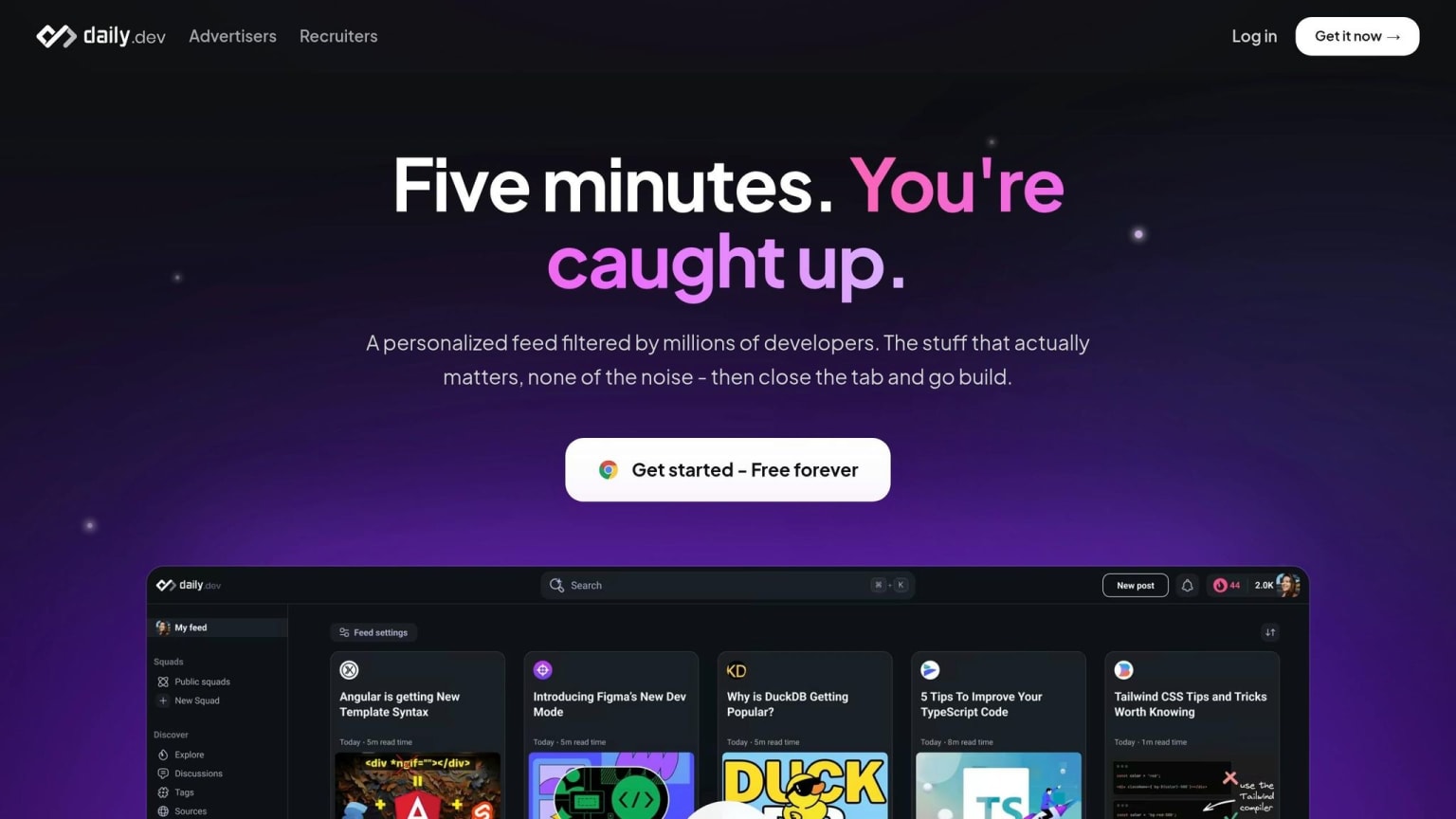
If you want this habit to stick, it helps to use a feed that fits into places you already spend time. daily.dev turns a new tab into a quick stream of relevant articles and tutorials, so keeping up feels easy instead of forced.
Better information leads to better tradeoffs. And making better tradeoffs is a big part of what senior engineers are paid to do.
Side projects vs. lower-effort ways to stay current
The table below shows the tradeoff in plain terms.
| Method | Time Cost | Burnout Risk |
|---|---|---|
| Side Projects | High | High |
| Curated Feeds (daily.dev) | Low | Low |
| Team Learning / Mentoring | Medium | Low |
| Focused Reading (Source Code) | Medium | Low |
| Podcasts / Commute Learning | Low | Low |
Habits that fit inside a normal workday come with much less burnout risk and still help sharpen your technical judgment.
Conclusion: A path to senior that doesn't cost your evenings
Seniority doesn't come from writing code after dinner. It comes from changing how you work: owning outcomes, not just tickets, flagging risks before anyone has to ask, and making the whole team better. That's why seniority is a workday habit, not a weekend identity.
Side projects can help, but they aren't the bar. If you like building things on your own time, great. But that's a bonus, not a requirement. The job is to grow during the hours you're already paid for.
Staying current doesn't need to eat up your evenings, either. Small, steady habits during the workday are enough.
So stop treating your evenings like a test. Grow on the clock, keep up in small ways, and drop a myth that was never true in the first place.
FAQs
How can I prove senior-level impact without side projects?
Show impact through your work, not by piling on more code. Seniority shows up when you solve messy business problems, deal well with legacy systems, and help other people get better at their jobs.
Look past the git log. A lot of your value comes from things like writing design docs, leading incident retrospectives, making sound architecture calls, scoping work well, explaining trade-offs clearly, and improving documentation, code reviews, and technical judgment across the team.
What should I focus on during work hours to grow faster?
Focus less on just writing code and more on solving business problems. That shift matters. A strong engineer doesn't stop at "Can I build this?" They also ask, Should this be built at all? That means understanding how the whole system works, keeping technical debt under control, and looking past the ticket to the business goal behind it.
It also helps to make space for deep work. Complex problems usually don't get solved in five distracted minutes between meetings and Slack messages. The same goes for learning. If you want to grow, you need blocks of time to think, test ideas, and wrestle with hard stuff.
Your impact can also stretch well beyond your own code. Mentor teammates. Improve the way the team works. Communicate clearly with engineers, managers, and stakeholders. Those things may feel less flashy than shipping a feature, but they often matter just as much.
How do I stay current if I stop coding at night?
Yes - staying current without coding at night is possible. Seniority comes from solving business problems, not from spending more hours at a keyboard.
Use your work hours to stay sharp. Read the source code of the libraries you use. Explain concepts to teammates. Take on projects in new domains.
Keep coding on a regular basis within your role, and make rest a priority so you can think clearly and work well with others.