

Compare the top 10 developer advocacy platforms in 2024 based on community engagement, content creation, social media management, event hosting, analytics, and collaboration. Find the best platform for your developer advocacy needs.
This article compares the top 10 developer advocacy platforms in 2024 based on community engagement, content creation, social media management, event hosting, analytics, and collaboration.
Related video from YouTube
Quick Comparison
Platform
Community Engagement
Content Creation
Social Media
Event Hosting
Analytics
Collaboration
DevHunt
⭐⭐⭐⭐
⭐⭐⭐
⭐⭐
⭐
⭐⭐
⭐⭐
Advocu
⭐⭐⭐
⭐⭐⭐
⭐⭐
⭐⭐
⭐⭐⭐⭐
⭐⭐⭐
GitHub
⭐⭐⭐⭐
⭐⭐⭐⭐
⭐⭐
⭐⭐
⭐⭐⭐
⭐⭐⭐⭐
GitLab
⭐⭐⭐⭐
⭐⭐⭐⭐
⭐⭐
⭐⭐⭐
⭐⭐⭐
⭐⭐⭐⭐
Discourse
⭐⭐⭐⭐
⭐⭐⭐⭐
⭐⭐⭐
⭐⭐
⭐⭐⭐
⭐⭐⭐
Circle.so
⭐⭐⭐
⭐⭐⭐
⭐⭐⭐
⭐⭐
⭐⭐⭐
⭐⭐⭐
Buffer
⭐⭐
⭐⭐⭐
⭐⭐⭐⭐
⭐
⭐⭐⭐
⭐⭐
Hootsuite
⭐⭐⭐
⭐⭐⭐
⭐⭐⭐⭐
⭐
⭐⭐⭐
⭐⭐
Common Room
⭐⭐⭐⭐
⭐⭐⭐
⭐⭐⭐
⭐⭐
⭐⭐⭐⭐
⭐⭐⭐
Slack
⭐⭐⭐⭐
⭐⭐⭐
⭐⭐⭐
⭐⭐
⭐⭐⭐
⭐⭐⭐⭐
The article provides an in-depth comparison of these platforms, highlighting their features, usability, community support, and pricing. It also summarizes the pros and cons of each platform to help you make an informed decision.
1. DevHunt
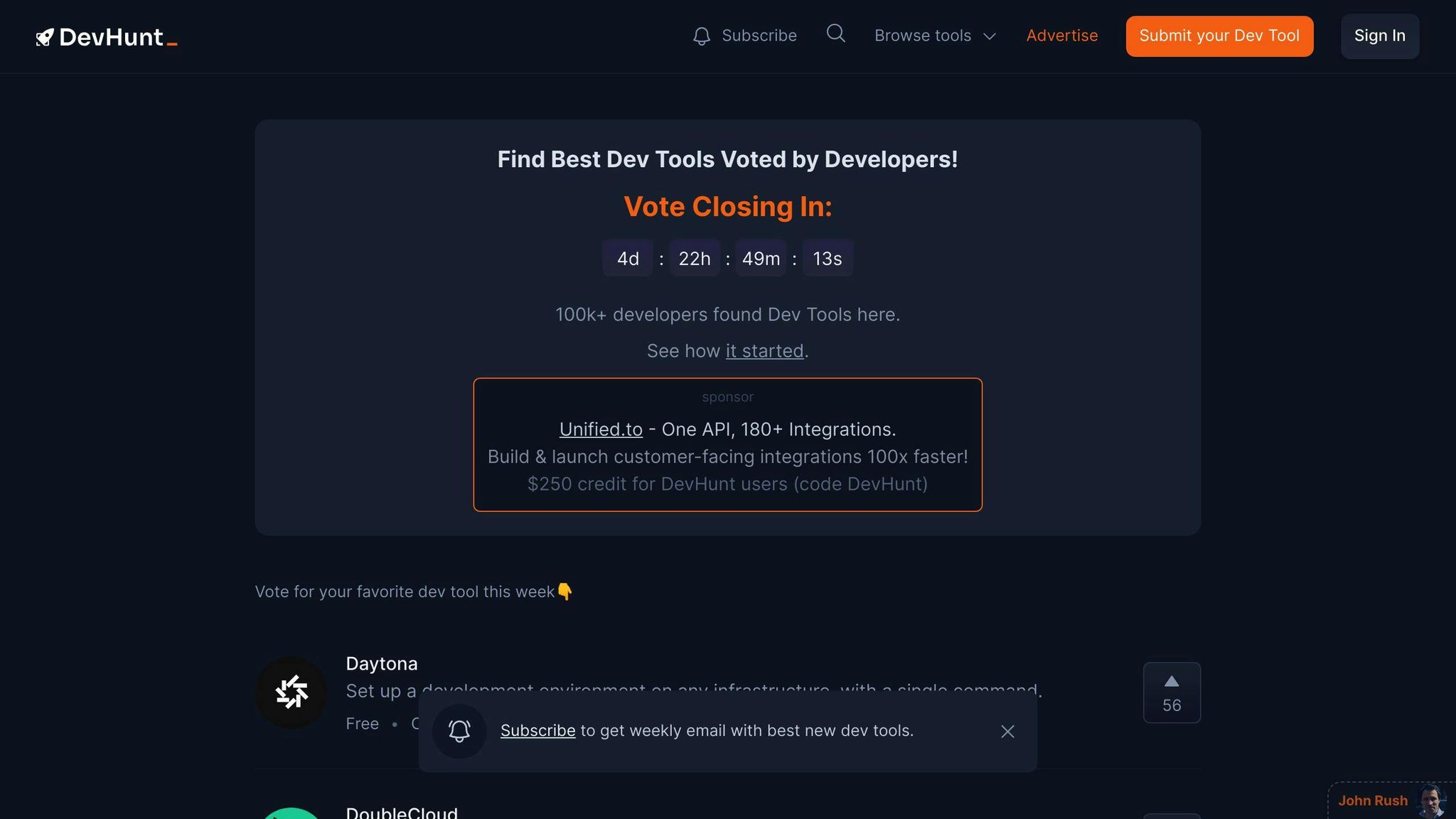
DevHunt is a platform for developers to showcase their projects and connect with the community. It's an open-source launchpad for dev tools.
Features
DevHunt lets developers list and showcase various tools, including:
- Open source tools
- APIs
- Frameworks
- Libraries
- IDEs
- Testing tools
- Monitoring tools
- Version control systems
- Package managers
- Build tools
- Deployment tools
- Analytics services
- Database systems
- Container orchestration tools
- Collaboration platforms
The platform promotes these tools through voting, comments, newsletters, social media, and profile badges. Popular launches get featured prominently.
Usability
DevHunt has a user-friendly interface and a large collection of projects. The search function is strong, making it easy to find specific resources. Users can customize their feed based on interests for personalized content.
Community Support
DevHunt has an active community of developers who share resources, tools, and projects. Users can engage by upvoting, bookmarking, and commenting on posts. They can also follow other developers and industry experts.
Pricing
DevHunt is free to use. Users can access and browse all reviews, feature comparisons, and discussions at no cost. Signing up and contributing reviews and insights is also free.
2. Advocu
Features
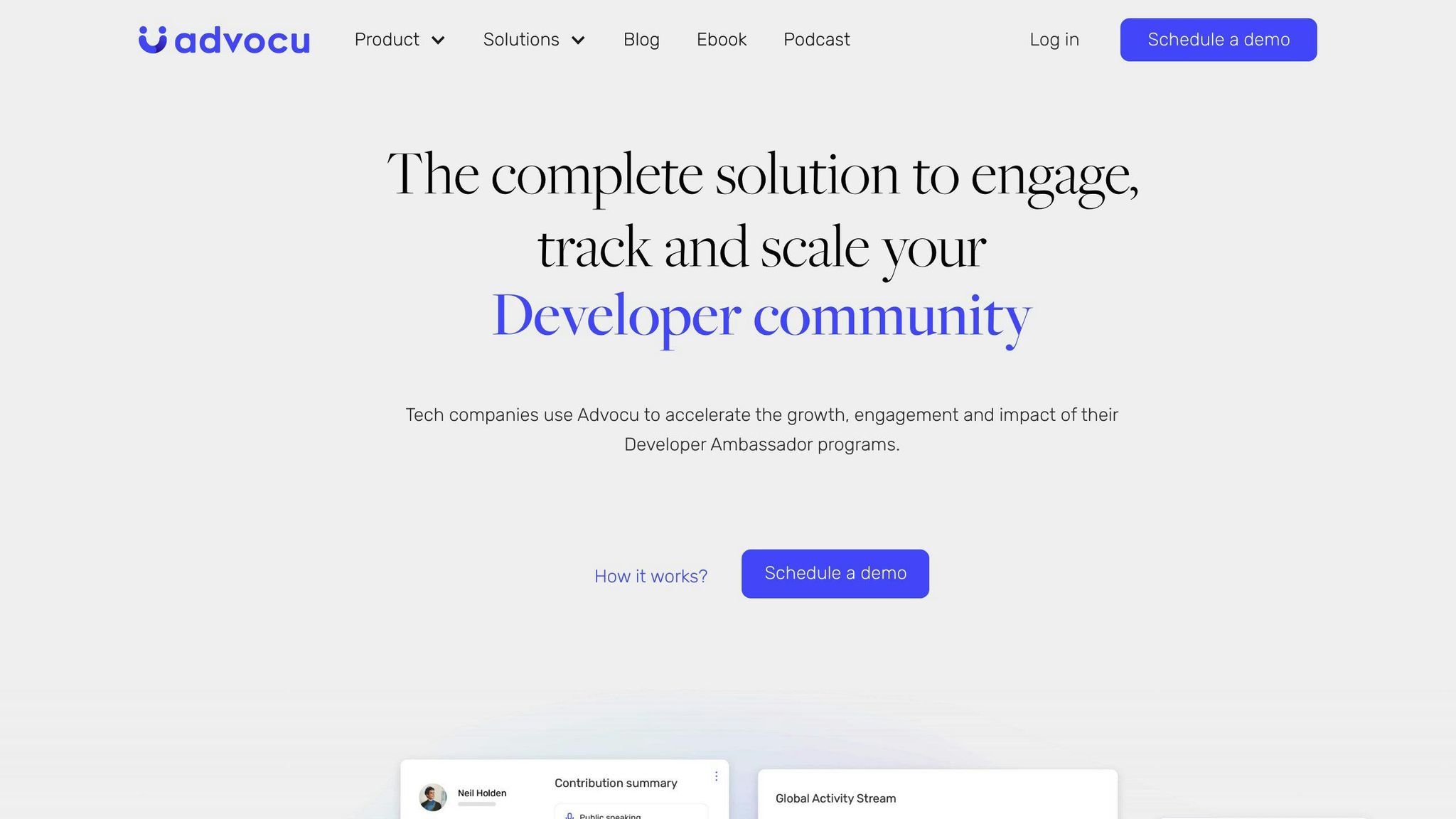
Advocu is a tool for developer relations teams to manage and grow their advocacy programs. Key features include:
- Centralized application process
- Custom workflows for operations
- Unified data source
- Searchable advocate profiles
- Unified format for advocate activities
- Platform for members to share contributions
- Scalable interactions and ROI tracking
Usability
Advocu has an easy-to-use interface that helps teams manage their tasks and focus on community growth. It automates manual work, allowing more time for planning and understanding growth drivers.
Community Support
Advocu tracks contributions and builds an activity stream. It helps ambassadors connect, collaborate, and get inspired. The platform also automates onboarding and maintains consistent communication with candidates.
3. GitHub
Features
GitHub is a well-known platform for developers, offering various features to support developer advocacy:
Feature
Description
Open-source repository
Manage and share open-source projects.
Collaboration tools
Pull requests, code reviews, and issue tracking for easy project collaboration.
Community engagement
Engage with other developers through comments, issues, and pull requests.
Usability
GitHub has a user-friendly interface, making it easy for developers to navigate and use its features. The platform offers tutorials and guides to help new users get started.
Community Support
GitHub has a large, active community of developers. It provides features like GitHub Discussions, allowing developers to talk about specific topics or projects.
4. GitLab
Features
GitLab is a popular platform for developers, offering a range of features to support developer advocacy:
Feature
Description
Developer Advocacy Calendar
Manage and track upcoming events and speaking engagements.
Release Day
Stay updated on the latest releases and features.
Community Office Hours
Engage with the community through regular office hours.
Usability
GitLab has a user-friendly interface, making it easy for developers to navigate and use its features. The platform provides a calendar view to visualize upcoming events and speaking engagements.
Community Support
GitLab has an active community of developers, with features like Release Day and Community Office Hours that facilitate engagement and collaboration. The platform also supports open-source projects and provides a space for developers to share their experiences and knowledge.
Note: The content is generated based on the provided information and is concise, clear, and practical. It directly addresses the reader's request and provides actionable information and advice.
5. Discourse
Features
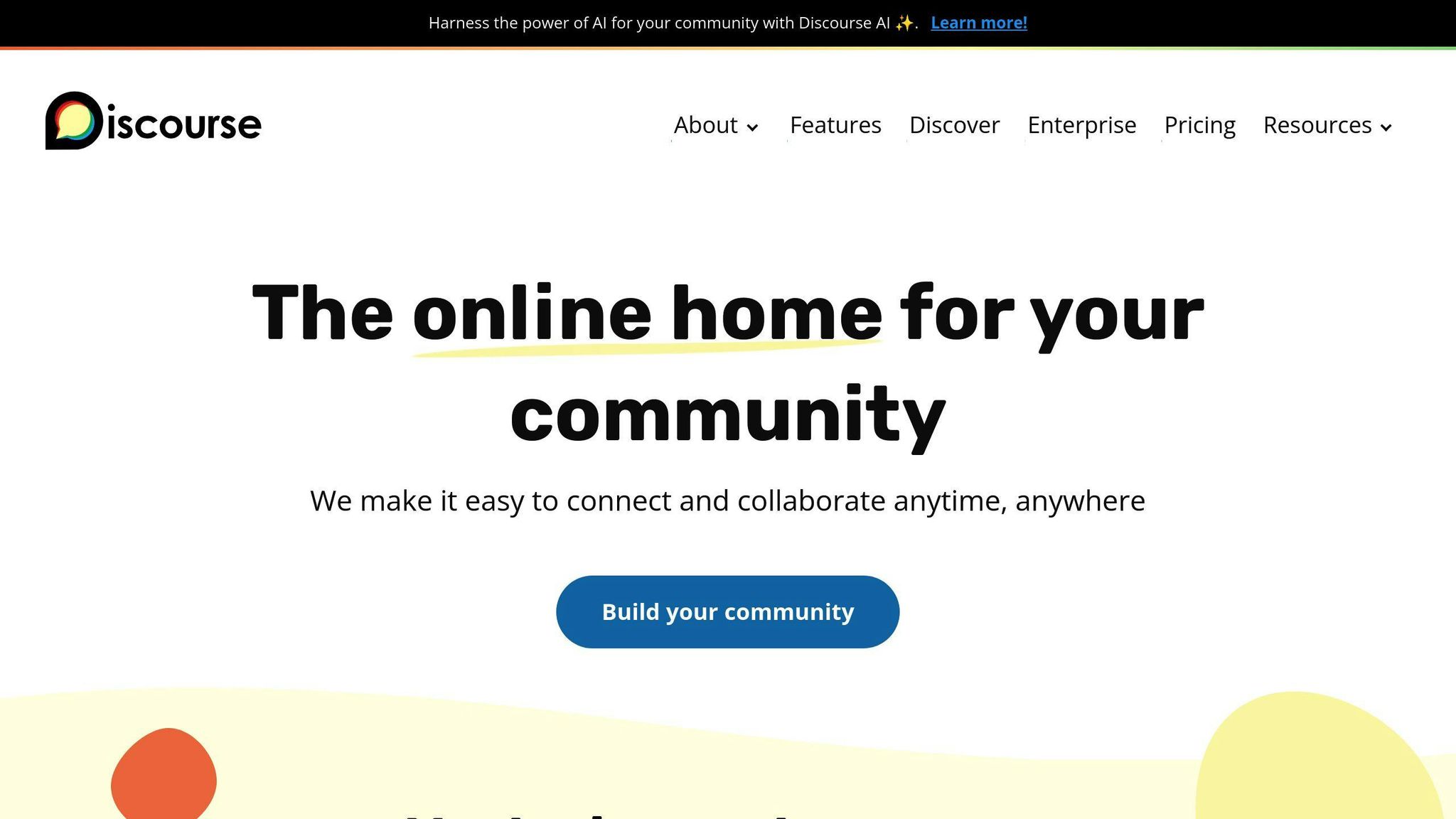
Discourse is an open-source community platform with features to support developer advocacy:
Feature
Description
Customizable categories and tags
Organize discussions for easy content discovery.
Moderation tools
Manage the community with flagging, muting, and filters.
Tool integration
Connect with Slack, WordPress, and more.
Rich discussions
Embed multimedia, create polls, use emojis, and message easily.
Gamification
Reward active members with increased privileges.
Usability
Discourse has a user-friendly interface that works well on both desktop and mobile devices. This ensures users can access the forum from anywhere.
Community Support
Discourse focuses on community support with real-time notifications, customizable settings, and a powerful search engine. It also has a large developer community that contributes to its development and offers user support.
sbb-itb-bfaad5b
6. Circle.so
Features
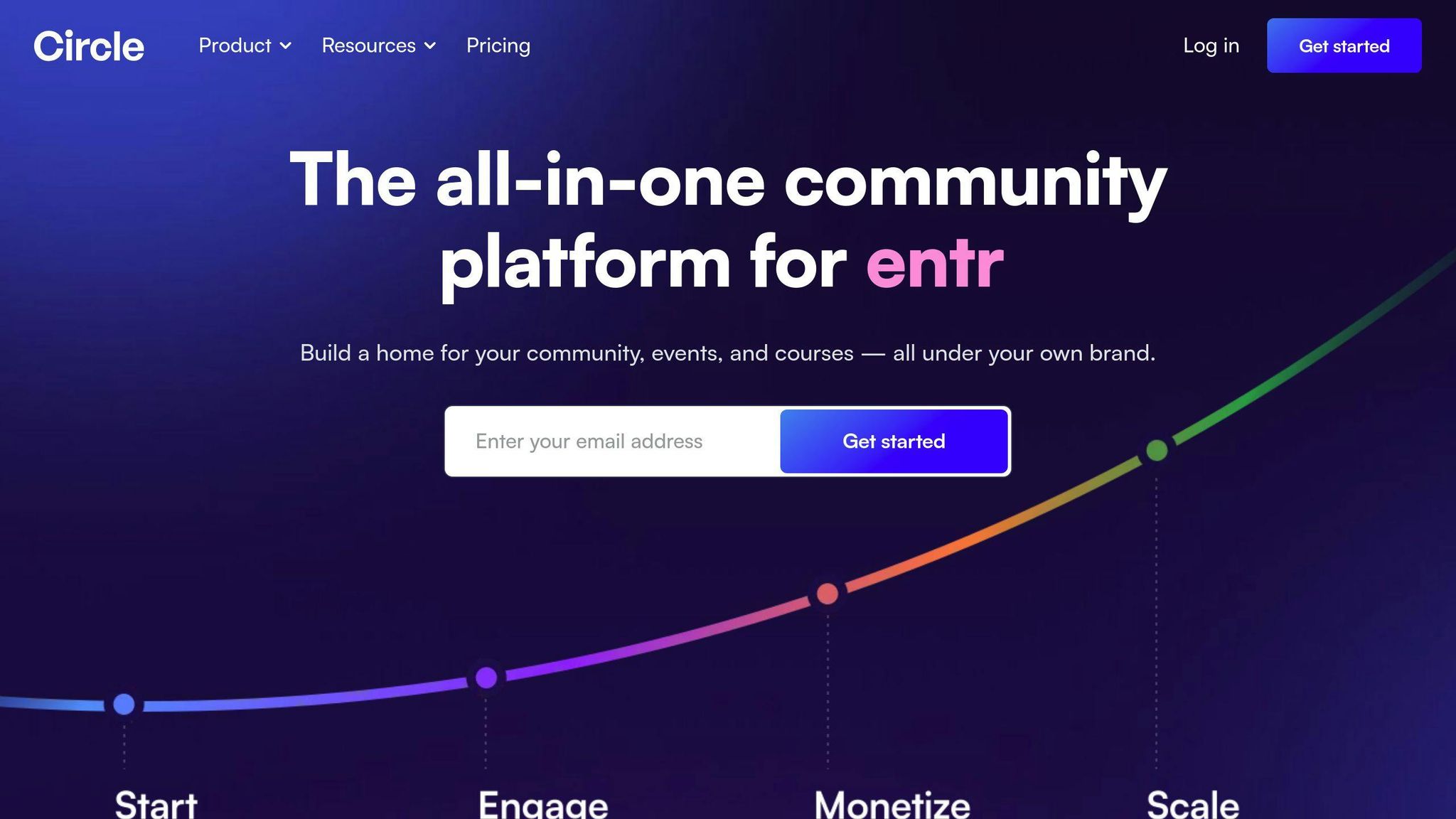
Circle.so is a platform for creating private, customizable online communities. It is designed for creators, entrepreneurs, and businesses. Key features include:
Feature
Description
Threaded discussions
Organize conversations in a clear, structured way.
Member directories
Keep track of community members.
Private messaging
Communicate directly with members.
Custom spaces
Create unique areas for different topics or groups.
Tool integration
Connect with email platforms, payment processors, and website builders.
Usability
Circle.so is easy to use, with a simple setup process for managing a community. The design is intuitive, making it easy for both managers and members to navigate.
Community Support
Circle.so offers real-time notifications, customizable settings, and a strong search engine. There is also a dedicated support team to help with any issues.
Pricing
Circle.so has five pricing plans:
Plan
Price
Features
Basic
$39/month
Essential features for small communities.
Professional
Varies
Additional tools for growing communities.
Business
Varies
Advanced features for larger communities.
Enterprise
$399/month
Full suite of features for large organizations.
Circle Plus
Varies
Premium support and additional services.
A free 14-day trial is available to test the platform.
7. Buffer
Features
Buffer is a platform for managing scheduled social media campaigns. It allows users to queue URLs from their browser or mobile, add them to the queue, and publish at different times. Users can also upload or override social images for better visuals.
Usability
Buffer has a simple and intuitive interface. It offers helpful extensions and apps, including:
- Chrome extension
- iOS app
- Android app
These tools make it easy to share content and schedule posts.
Community Support
Buffer provides support through its website and social media channels. Users can find resources and tutorials on the platform's website.
Pricing
Buffer offers a Pro tier suitable for Developer Advocates. Pricing details are not publicly disclosed, but users can expect a monthly or annual fee for access to the platform's features.
8. Hootsuite

Features
Hootsuite Amplify is a tool that helps employees share company content on social media. It includes:
Feature
Description
Content Recommendations
Suggests content for employees to share.
Post Impact Reports
Shows the impact of shared posts.
Leaderboard
Tracks employee participation and engagement.
Usability
Hootsuite has a simple interface, making it easy for everyone to use. It also has a mobile app for sharing content on the go.
Community Support
Hootsuite offers support through its website and social media channels. Users can find resources and tutorials online.
Pricing
Hootsuite has several pricing plans:
Plan
Price
Features
Professional
$49/month
Basic features for individuals.
Team
$129/month
Tools for small teams.
Business
$739/month
Advanced features for larger teams.
Enterprise
Custom pricing
Full suite of features for large organizations.
9. Common Room
Features
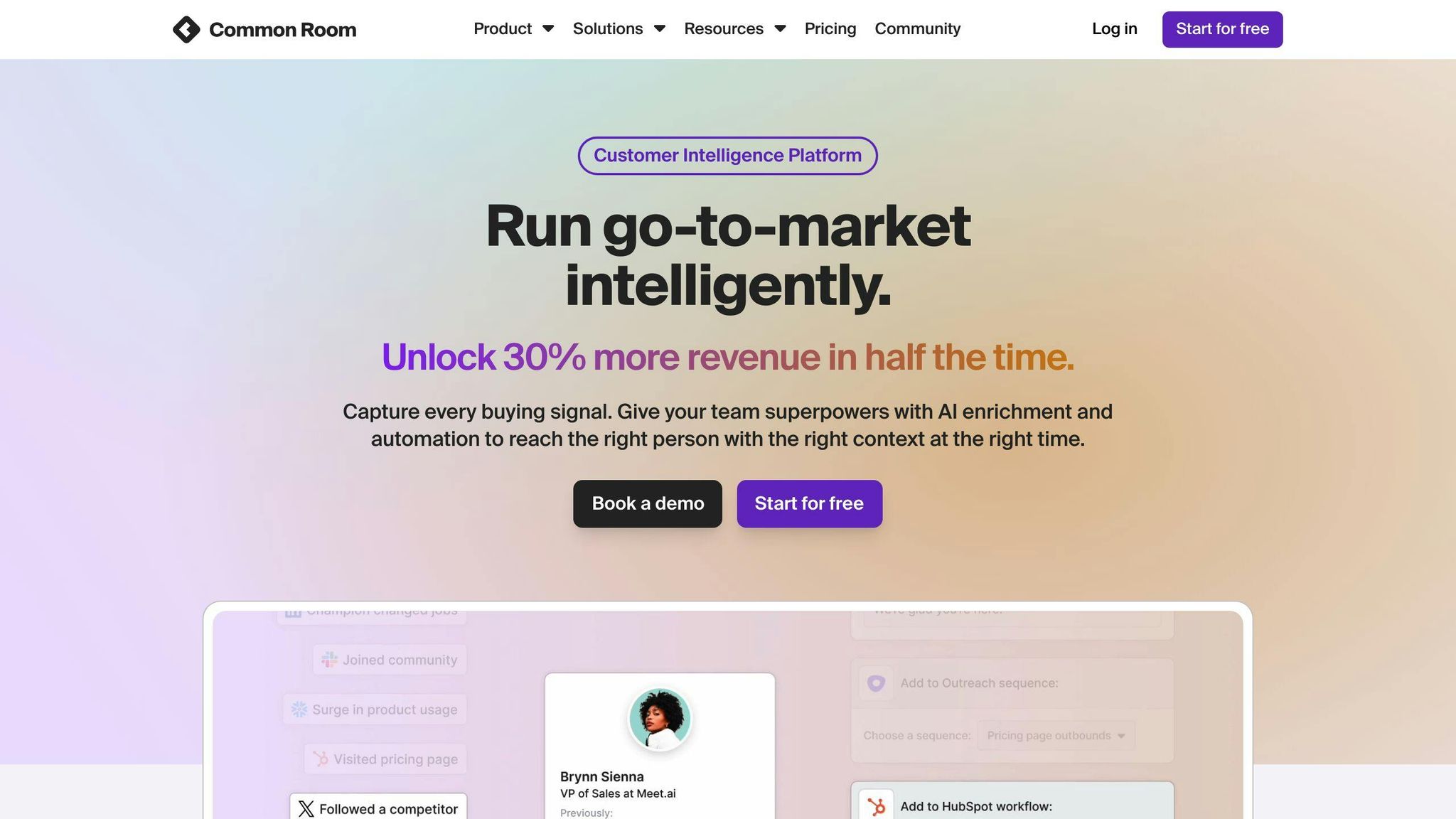
Common Room is a platform that combines community engagement, product usage, and customer data. It provides insights to help teams understand and engage with their community. Key features include:
Feature
Description
Real-time Identity Enrichment
Identify active customers, champions, and influencers with real-time data.
Auto-tagging
Automatically tag community members based on their activity.
Workflow Automation
Automate tasks with Team Alerts and workflows.
Usability
Common Room offers a unified view of each member across all channels. It highlights insights and trends to help teams respond to community activity effectively.
Community Support
Common Room provides quick and responsive support. Users appreciate the team's prompt responses and the ability to schedule meetings for issue resolution. The platform also offers detailed community reports to showcase the value of community efforts.
Pricing
Common Room offers a free trial. Pricing plans are available upon request.
10. Slack
Features
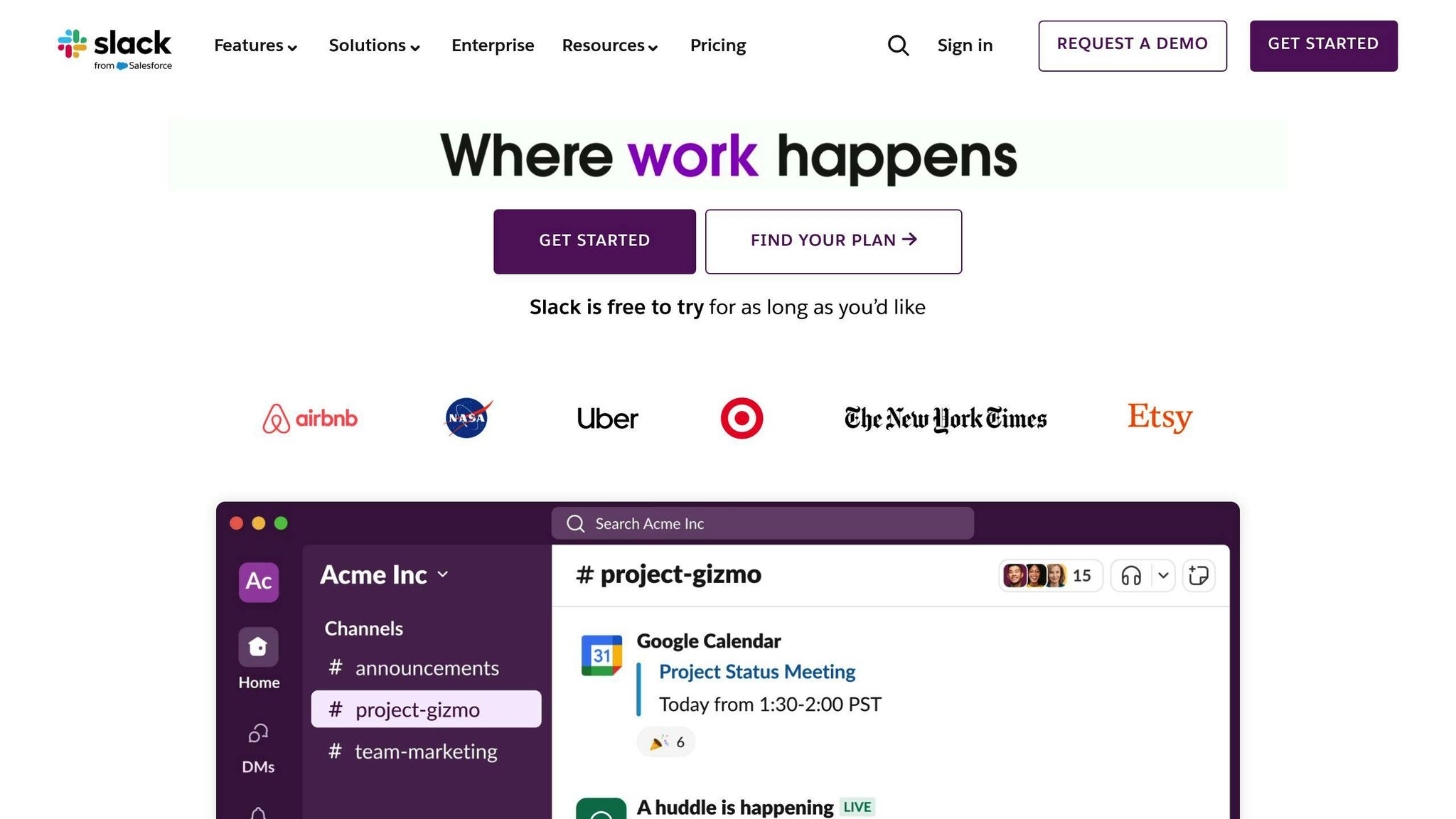
Slack is a popular communication platform with various features for community engagement and collaboration:
Feature
Description
Multi-Channel Invite
Create tiered offers with different access levels per invite page.
Automated Invite
Members receive an email invite after signing up, which they need to accept to join.
Number of Owners
One workspace creates one LaunchPass account, with only the primary owner able to link bank/card info for payouts.
Usability
Slack has a user-friendly interface for community members to engage with each other. It offers public and private channels to organize conversations and content.
Community Support
Slack has a large user and developer community, with extensive documentation and support resources. It also integrates with many other tools and services to enhance community engagement.
Pricing
Slack offers a free plan and several paid plans with different features and pricing. The cost depends on the number of users and features required.
Pros and Cons
Here's a summary of the main advantages and disadvantages of each platform:
Pros
Platform
Pros
DevHunt
Large community, easy to find developers, feature-rich
Advocu
User-friendly interface, automated invite system, scalable
GitHub
Industry standard, large user base, integrates with many tools
GitLab
All-in-one platform, easy project management, self-hosted option
Discourse
Highly customizable, large community, easy integration
Circle.so
Scalable, automated workflows, integrates with GitHub
Buffer
Easy to use, affordable, integrates with many social media platforms
Hootsuite
Industry standard, easy to use, integrates with many social media platforms
Common Room
Highly customizable, easy to use, integrates with many tools
Slack
Large user base, easy to use, integrates with many tools
Cons
Platform
Cons
DevHunt
Steep learning curve, limited customization options
Advocu
Limited scalability, limited integration options
GitHub
Can be overwhelming for new users, limited customer support
GitLab
Self-hosted option requires technical expertise, limited customization options
Discourse
Steep learning curve, limited scalability
Circle.so
Limited integration options, limited customization options
Buffer
Limited scalability, limited integration options
Hootsuite
Limited customization options, limited scalability
Common Room
Limited scalability, limited integration options
Slack
Limited customization options, can be overwhelming for new users
Final Thoughts
Choosing the right developer advocacy platform can greatly impact your success. The top 10 platforms we compared each offer unique features and benefits. Here's a quick summary to help you decide:
Platform
Pros
Cons
DevHunt
Large community, easy to find developers, feature-rich
Steep learning curve, limited customization options
Advocu
User-friendly interface, automated invite system, scalable
Limited scalability, limited integration options
GitHub
Industry standard, large user base, integrates with many tools
Can be overwhelming for new users, limited customer support
GitLab
All-in-one platform, easy project management, self-hosted option
Self-hosted option requires technical expertise, limited customization options
Discourse
Highly customizable, large community, easy integration
Steep learning curve, limited scalability
Circle.so
Scalable, automated workflows, integrates with GitHub
Limited integration options, limited customization options
Buffer
Easy to use, affordable, integrates with many social media platforms
Limited scalability, limited integration options
Hootsuite
Industry standard, easy to use, integrates with many social media platforms
Limited customization options, limited scalability
Common Room
Highly customizable, easy to use, integrates with many tools
Limited scalability, limited integration options
Slack
Large user base, easy to use, integrates with many tools
Limited customization options, can be overwhelming for new users
Each platform has its strengths and weaknesses. Your choice will depend on your specific needs and goals. Whether you need DevHunt's large community, Advocu's automated system, or GitHub's reputation, there's a platform that can help you succeed in developer advocacy.


